
Automotive dealership personalized video marketing India: How OEMs scale test-drives, service, and loyalty in 2026
Estimated reading time: ~12 minutes
Key Takeaways
- Personalized video at scale bridges the gap between digital leads and showroom footfall across India in 2026.
- WhatsApp-delivered videos leverage 98% open rates and high CTRs to drive test-drives, service, and loyalty.
- An enterprise stack with low-latency rendering, vernacular support, and secure governance is essential for OEM networks.
- CRM/CDP-triggered videos enable real-time personalization using model, city, and dealer affinity data.
- A disciplined 30-60-90 day roadmap proves ROI and scales from pilot to national always-on programs.
The landscape of Indian automotive retail has shifted from mass broadcasting to hyper-individualized engagement. In 2026, automotive dealership personalized video marketing India has emerged as the definitive strategy for Original Equipment Manufacturers (OEMs) to bridge the gap between digital interest and physical showroom footfall. While traditional SMS and email blasts often go unread, one-to-one video content delivered at scale allows brands to speak directly to a customer’s specific needs, driving unprecedented conversion rates across the ownership lifecycle.
The execution gap that once plagued the industry—where a lead was generated online but lost in the transition to a local dealer—has been closed by AI-driven automation. Platforms like TrueFan AI enable OEMs to transform static CRM data into dynamic, cinematic video experiences that mention the customer by name, reference their preferred local dealership, and offer a personalized invitation for a test drive or service appointment. This level of precision is no longer a luxury; it is the operational standard for market leaders like Hero MotoCorp, Maruti Suzuki, and Tata Motors as they navigate a highly competitive 2026 market.
Why 2026 is the year to operationalize car dealership AI video campaigns India 2026
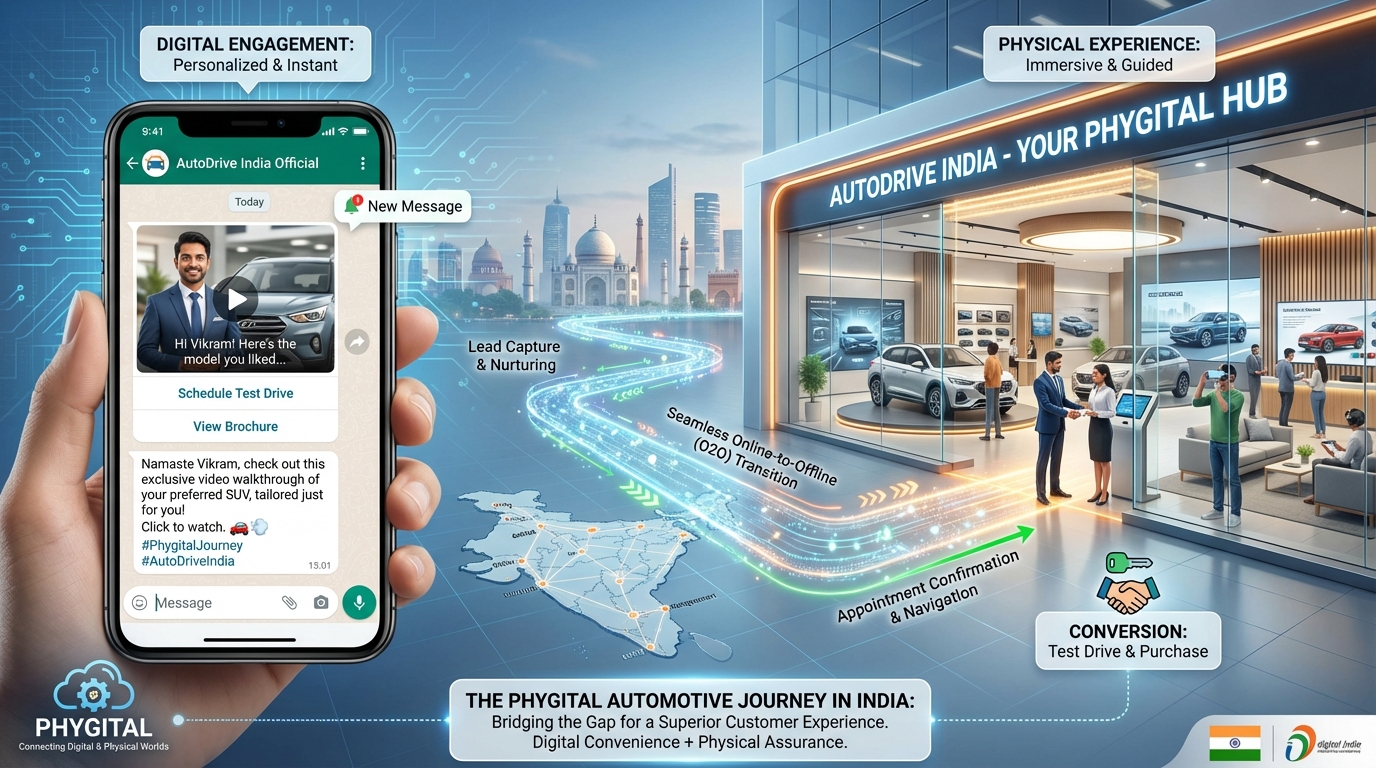
The Indian automotive sector is projected to see a steady volume growth of 4-6% in the 2026-27 fiscal year, according to ICRA. However, the real story lies in how customers are discovered and retained. Data from Meta and FADA indicates that over 72% of new car buyers now find their preferred brands through social platforms, yet the final purchase decision remains anchored in the physical dealership experience. This “phygital” journey requires a communication medium that is as engaging as a social media ad but as personal as a showroom visit.
Car dealership AI video campaigns India 2026 leverage the fact that WhatsApp has become the de-facto communication channel for the Indian consumer, boasting over 850 million active users. With open rates exceeding 98% and click-through rates (CTR) for video content reaching as high as 60%, the opportunity for OEMs is massive. Hyundai Motor India, for instance, previously reported receiving over 1.2 million responses for car servicing via WhatsApp, signaling a massive consumer readiness for automated, video-led service and retention nudges.
Furthermore, the modernization of Customer Data Platforms (CDPs) in the Indian auto sector has reached a tipping point. By 2026, most major OEMs have unified their data silos, allowing marketing teams to trigger videos based on real-time events. Whether it is a lead creation on a website, a service due date approaching, or a finance warranty nearing expiration, the ability to link model interest, city, and dealer affinity to a personalized video scene is what separates high-performing networks from the rest.
Sources:
- ICRA: Indian auto industry to see moderate 3-6% volume growth in 2026-27
- ET Auto: 72% of new car buyers find brands through Meta platforms
- Hyundai 1.2M+ WhatsApp service responses
The enterprise-grade stack for OEM dealer network video activation
Scaling OEM dealer network video activation across thousands of touchpoints requires more than just creative flair; it demands a robust, enterprise-grade technology stack. OEMs must demand platforms that offer real-time personalization and delivery. In 2026, low-latency rendering is non-negotiable. The gap between a CRM trigger (like a customer booking a service) and the delivery of a personalized confirmation video must be under 30 seconds to maintain the “wow” factor and immediate relevance.
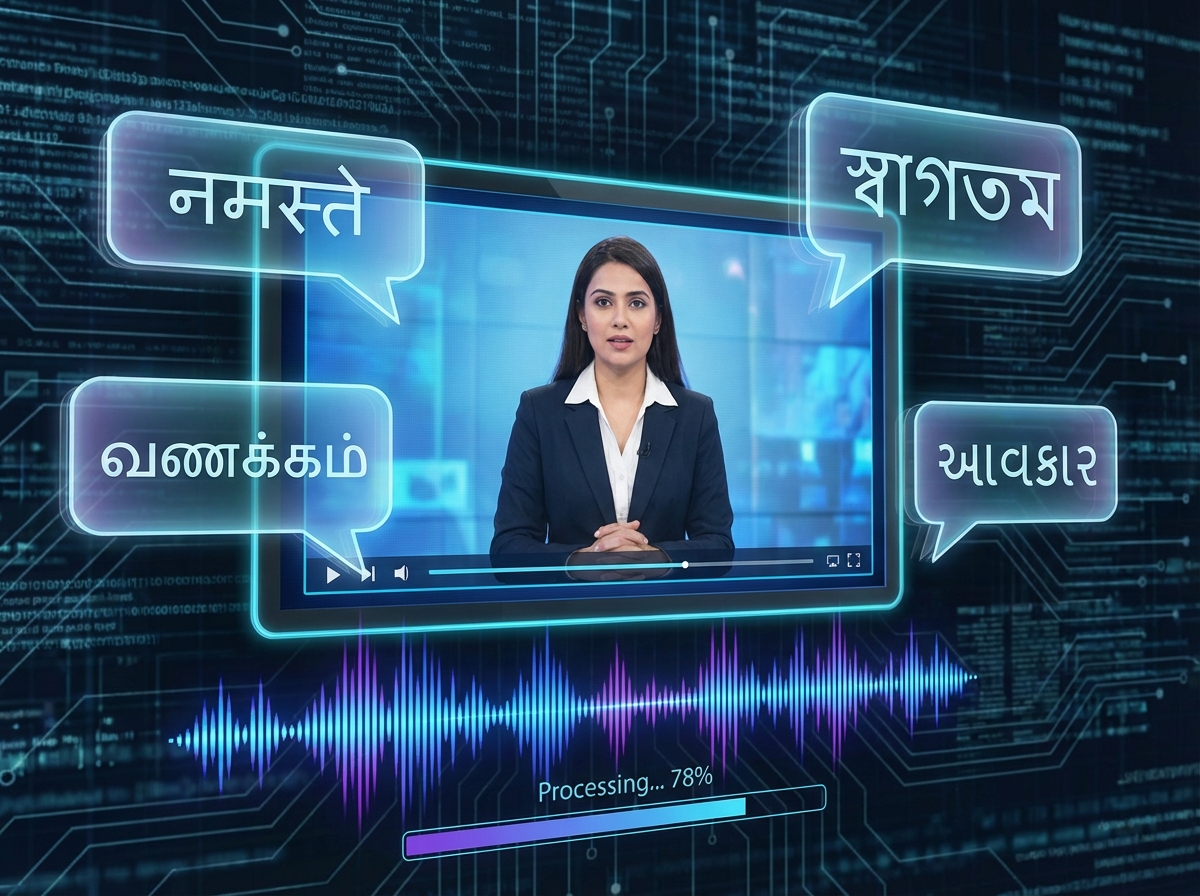
TrueFan AI's 175+ language support and Personalised Celebrity Videos provide the linguistic diversity required for the Indian market. In a country where “Bharat” meets “India,” vernacular reach is the key to trust. A customer in Ahmedabad receiving a video in Gujarati, or a bike owner in Madurai being addressed in Tamil, sees a 3x higher watch-through rate compared to generic English content. This stack must include voice retention and perfect lip-sync technology to ensure that the spokesperson—whether a celebrity or a CEO—appears to be speaking the local dialect naturally.
Governance and security are the final pillars of the enterprise stack. With the implementation of India’s Digital Personal Data Protection (DPDP) Act, OEMs require ISO 27001 and SOC 2 certified partners. The platform must offer role-based access control (RBAC), allowing central marketing teams to set brand guardrails while giving local dealers the flexibility to add region-specific offers or dealership locations. This ensures that while the creative is localized, the brand identity remains consistent across the entire national network.
Sources:
- TrueFan Enterprise AI Video Platform India overview
- ET Auto: Revolutionizing automotive experiences with CDPs
High-ROI automotive use cases to deploy this quarter
To maximize the impact of automotive dealership personalized video marketing India, OEMs should focus on high-intent lifecycle stages. These use cases are designed to move the needle on specific KPIs, from showroom walk-ins to long-term service loyalty.
1. Personalized test drive invitation video
The most critical transition in the car-buying journey is moving a digital lead to a physical test drive. A personalized test drive invitation video addresses the lead by name, showcases the specific model they inquired about, and introduces them to their nearest dealer. By including a dynamic map deeplink and a “Book Now” button within the WhatsApp message, OEMs can reduce the friction of scheduling. In 2026, these videos often feature the dealer principal or a celebrity ambassador inviting the customer for a “VIP experience,” resulting in a 25% uplift in confirmed appointments.
2. Automotive service reminder video automation
Service retention is the backbone of dealership profitability. Automotive service reminder video automation replaces the annoying “robocall” with a helpful, personalized nudge. These videos cite the customer's specific odometer reading, the due date, and the preferred service center. Advanced logic can even offer dynamic incentives: “Hi Rajesh, your Safari is due for its 30,000km service. Book via this video for a free interior enrichment package at our Worli center.” This level of detail drives service adherence and increases the “upsell” take-rate for value-added services.
3. Auto dealer customer retention video and loyalty campaigns
Post-purchase engagement is where brand advocates are made. Vehicle owner loyalty video campaigns can include 1-month “How-to” guides for new features, 11-month insurance renewal reminders, and personalized birthday or festive greetings. For the two-wheeler segment, two-wheeler dealer video marketing India focuses on hyper-vernacular content for Tier-3 and Tier-4 markets, emphasizing mileage, maintenance tips, and community ride invitations. These touchpoints ensure the brand remains top-of-mind long after the initial sale.
4. Car launch video personalization India
During a new model launch, the noise in the market is deafening. Car launch video personalization India allows OEMs to cut through by showing different video variants based on past behavior. A customer who previously owned an SUV receives a video highlighting the new model's off-road capabilities, while a first-time buyer sees a version focused on safety and fuel efficiency. This targeted approach, combined with a local launch event invite, drives massive showroom walk-in video personalization success.
Sources:
Technical Blueprint: Automotive CRM video integration and WhatsApp execution
The magic of automotive dealership personalized video marketing India happens in the integration layer. Automotive CRM video integration is defined as the process of mapping CRM/CDP customer attributes—such as name, model owned, city, nearest dealer ID, and service due date—to dynamic video scenes via an API-templating engine. This enables the automated generation of one-to-one videos that are triggered by specific customer actions or milestones.
For a successful automobile WhatsApp video marketing India strategy, the workflow typically follows these steps:
- Data Ingestion: The OEM's CRM (e.g., Salesforce, SAP, or a custom CDP) identifies a customer segment, such as “Leads for Model X in Bangalore.”
- Scene Architecture: The AI platform resolves the template. The “Intro” scene uses the customer's name; the “Product” scene shows the specific car color they configured; the “Local” scene displays the address of the nearest Bangalore dealer.
- Vernacular Resolution: If the customer's preferred language is marked as Kannada, the AI automatically generates the voice-over and subtitles in Kannada using virtual reshoot technology.
- WABA Delivery: The video is delivered via the WhatsApp Business API (WABA) using an approved Message Template (HSM). The message includes “Quick Reply” buttons like “Book Test Drive” or “Call Advisor.”
This technical plumbing ensures that the right message reaches the right person at the right time. By using virtual reshoots, marketing teams can change spoken lines—such as updating a festive offer from “10% off” to “15% off”—without ever needing to conduct a new physical shoot. This agility is essential for the fast-paced Indian automotive market where competitive offers change weekly.
Sources:
- ET Auto: Omnichannel 2.0 transforming customer experience
- TrueFan Enterprise: API and Scale capabilities
Measurement, Governance, and the 30-60-90 Day Roadmap
To prove that dealership footfall video marketing is delivering a return on investment, OEMs must move beyond vanity metrics like “views.” Solutions like TrueFan AI demonstrate ROI through hard conversion data. Key Performance Indicators (KPIs) should be segmented by use case:
- Test-Drive: Track the ratio of video sent to confirmed slot bookings and the subsequent “no-show” rate.
- Service: Measure the booking rate and the percentage of customers who adhere to their service schedule within the D+7 window.
- Footfall: Use QR code scans at the dealership reception to match walk-ins directly to the personalized video campaign.
Governance is equally vital. An OEM dealer network video activation involves thousands of stakeholders. The platform must provide a central dashboard for the CMO to see national performance, while allowing Regional Managers to drill down into specific dealer codes. This transparency fosters accountability and allows for the rapid scaling of successful pilots.
The 30-60-90 Day Implementation Roadmap
- Days 0–30 (Pilot): Select 20 high-performing dealers in a single region (e.g., NCR or Maharashtra). Launch two use cases: service reminders and test drive invites. Ensure CRM data hygiene for name and dealer mapping.
- Days 31–60 (Scale): Expand to 100+ dealers across 5 regions. Introduce A/B testing for different offer types (e.g., “Free Pick-up” vs. “Discount on Parts”). Begin tracking showroom walk-ins via CRM-linked QR codes.
- Days 61–90 (Always-On): Roll out the full lifecycle calendar, including car launch personalization and loyalty campaigns. Integrate with the CDP for real-time, event-triggered video generation across the entire national network.
Sources:
Conclusion
The future of automotive dealership personalized video marketing India is no longer a distant vision—it is an operational reality that is already driving billions in value for India’s largest OEMs. By turning static dealer networks into high-performing, data-driven engines for footfall and loyalty, brands can ensure that every customer feels like a VIP. Whether it is a personalized test drive invitation video for a new lead or a vehicle owner loyalty video campaign for a decade-long customer, the power of one-to-one video is unmatched.
As we move through 2026, the question for CMOs is no longer if they should adopt AI video, but how fast they can scale it. With a proven 30-60-90 day roadmap and the technical infrastructure to support 175+ languages, the path to market leadership is clear. It is time to move beyond the “blast” and start the conversation.
Ready to transform your dealer network? Book an enterprise workshop to scope your first automotive dealership personalized video marketing India pilot and see how AI can drive your 2026 growth.
Frequently Asked Questions
How do OEMs handle automotive CRM video integration for WhatsApp?
OEMs connect their CRM or CDP to an AI video platform via API. When a customer milestone is reached (e.g., a new lead is created), the CRM sends the customer's data (name, location, interest) to the platform. The platform generates a personalized video in real time and triggers a WhatsApp message through the brand's official WABA account.
Can we use celebrities for these personalized videos?
Yes. TrueFan AI's 175+ language support and Personalised Celebrity Videos allow brands to use a single celebrity shoot to create millions of unique videos where the star addresses each customer by name. This significantly increases engagement and brand recall.
Is this compliant with India's data privacy laws?
Absolutely. Enterprise-grade platforms are ISO 27001 and SOC 2 certified. They operate on a consent-first model, ensuring that only customers who have opted in for WhatsApp communication receive these videos, and all PII (Personally Identifiable Information) is encrypted.
What is the typical ROI for dealership footfall video marketing?
While results vary, market leaders have seen up to a 3x increase in participation rates and a significant reduction in customer churn. For example, Hero MotoCorp's campaign resulted in tens of thousands of dealership visits from a single festive video activation.
How long does it take to render a personalized video?
In 2026, the industry standard for enterprise solutions is under 30 seconds. This low-latency rendering ensures that the video can be delivered almost instantly after a customer interacts with a website or app.



