Customer retention personalized videos: Enterprise playbooks for onboarding, NPS, renewals, and churn prevention
Estimated reading time: ~12 minutes
Key Takeaways
- Personalized videos across the customer lifecycle drive up to 3.2x higher engagement and accelerate onboarding.
- Automate renewals, NPS loops, and churn prevention using real-time data and health scoring triggers.
- Balance scale with trust: comply with DPDP Act, consent management, and enterprise-grade security (ISO 27001, SOC 2).
- Use omnichannel delivery (email, in-app, WhatsApp, SMS) for timely, contextual video engagement.
- Adopt a 30-60-90 rollout and measure outcomes via onboarding completion, NPS shifts, renewals, and health score deltas.
Meta Description: Learn how enterprises use customer retention personalized videos, lifecycle video marketing automation, and churn prevention AI videos powered by customer health scoring automation to achieve up to 3.2x higher engagement, higher NPS, and stronger renewals.
Customer retention personalized videos have emerged as the definitive instrument for modern Customer Success (CS) and lifecycle marketing teams aiming to eliminate churn and maximize Lifetime Value (LTV). In an era where generic communication is increasingly filtered out by sophisticated consumers, these AI-generated, dynamically tailored videos address each customer by name, usage context, and specific account milestones. Platforms like TrueFan AI enable enterprises to deliver these high-impact assets automatically via lifecycle triggers across email, in-app notifications, WhatsApp, and SMS.
By integrating real-time data with generative video technology, organizations are witnessing transformative outcomes in activation and loyalty. Early adopters report up to 3.2x higher engagement, significantly faster time-to-value during onboarding, and a marked reduction in involuntary churn through proactive rescue workflows. As we navigate the complexities of the 2026 digital landscape, the transition from static text-based retention strategies to immersive, video-first experiences is no longer optional for market leaders.
The 2026 Shift Toward Lifecycle Video Marketing Automation
The current market landscape defines lifecycle video marketing automation as the strategic orchestration of data signals—such as sign-up events, feature usage, and billing cycles—to auto-generate and deliver personalized videos at the precise moment of maximum impact. This paradigm shift is driven by a fundamental change in consumer expectations. By 2026, shoppers expect deeper personalization and are demonstrably rewarding brands that provide it with increased loyalty and higher engagement rates.
Recent industry data underscores this evolution: approximately 42% of marketers now utilize video specifically to improve customer relationships and retention through personalized, value-add content. Furthermore, over 55% of consumers explicitly state a preference for AI-personalized videos over generic alternatives, signaling a broad acceptance of synthetic media when it provides genuine utility. In the B2B sector, buyers are increasingly seeking personalized demo and walkthrough videos to feel valued and informed during their post-purchase journey.
In the Indian context, the efficacy of these campaigns is amplified by the dominance of mobile-first channels like WhatsApp and SMS. However, this technological leap must be balanced with rigorous compliance. The Digital Personal Data Protection (DPDP) Act of 2023 mandates a consent-first approach to data processing, requiring enterprises to align their journey designs with strict consent management protocols. Successful retention strategies in 2026 are those that marry high-tech automation with high-trust data practices.
Sources:
- Siege Media: Video Marketing Statistics 2026
- SellersCommerce: AI Video Personalization Trends
- Attentive: 2026 Personalization Trends
- Luth Research: B2B Buyer Preferences
- MeitY: DPDP Act Official Text
Scaling Automated Customer Onboarding Videos and Milestone Celebrations
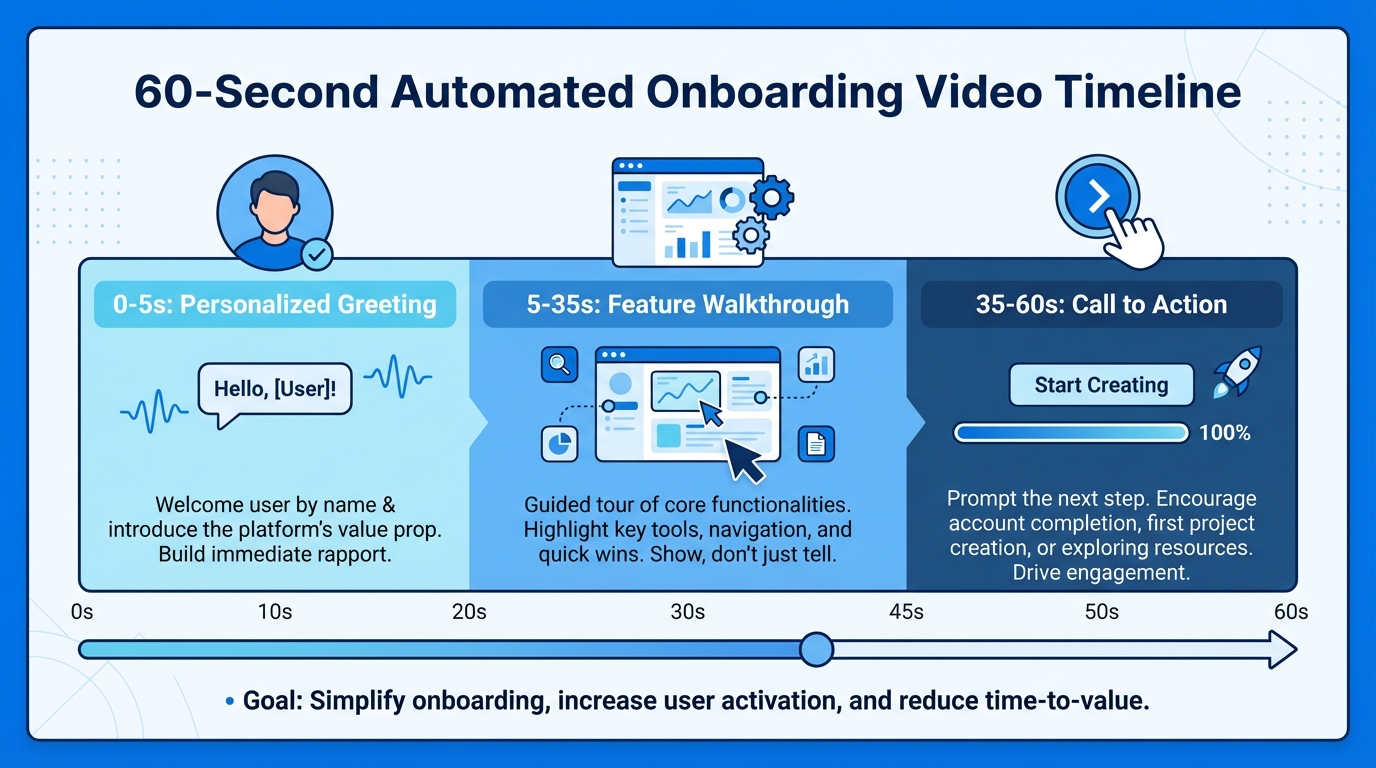
Automated customer onboarding videos serve as the critical first touchpoint in the retention lifecycle, guiding users through "first-value" actions within the initial 7 to 14 days of their journey. These videos are triggered by specific events such as account creation or the first successful login, and they dynamically incorporate fields like the user's name, plan tier, and primary business objective. By addressing the user's specific role and industry vertical, these videos reduce the cognitive load associated with learning a new platform.
A high-performing onboarding video typically follows a structured 60-second beat: the first 5 seconds greet the user by name and confirm their specific goal, followed by 25 seconds demonstrating 2-3 "quick wins" with clickable in-app CTAs. The final segment often includes social proof or a metric highlighting the speed at which similar users see value. TrueFan AI's 175+ language support and Personalised Celebrity Videos allow enterprises to deliver these messages with the added authority of a brand ambassador, ensuring the message resonates across diverse linguistic demographics.
Milestone celebration videos complement this by reinforcing habit loops through positive reinforcement. When a user hits a usage streak or completes a major project, an automated video can celebrate the achievement with personalized statistics, such as "You saved 12 hours this month using our automation." These moments of delight create an emotional connection that correlates with a 306% higher Customer Lifetime Value (CLV) in advanced case studies. Using virtual reshoots, marketing teams can iterate on these scripts in days rather than weeks, maintaining a fresh and relevant dialogue with their user base.
Sources:
- Lemonlight: Video Message Retention Stats
- Mediawide: Video Personalization and CLV
- TrueFan Enterprise Executive Document
Maximizing LTV Through Renewal Reminder Automation and NPS Loops
Renewal reminder automation is a strategic necessity for preventing revenue leakage and managing the "subscription fatigue" prevalent in 2026. Instead of static, easily ignored emails, enterprises are deploying personalized videos that summarize the year's realized ROI, highlight upcoming roadmap features, and simplify the renewal process with one-click payment links. These campaigns are typically phased at T-90, T-60, and T-30 days, with the final nudge offering an empathetic, video-based resolution for failed payments or expiring discounts.
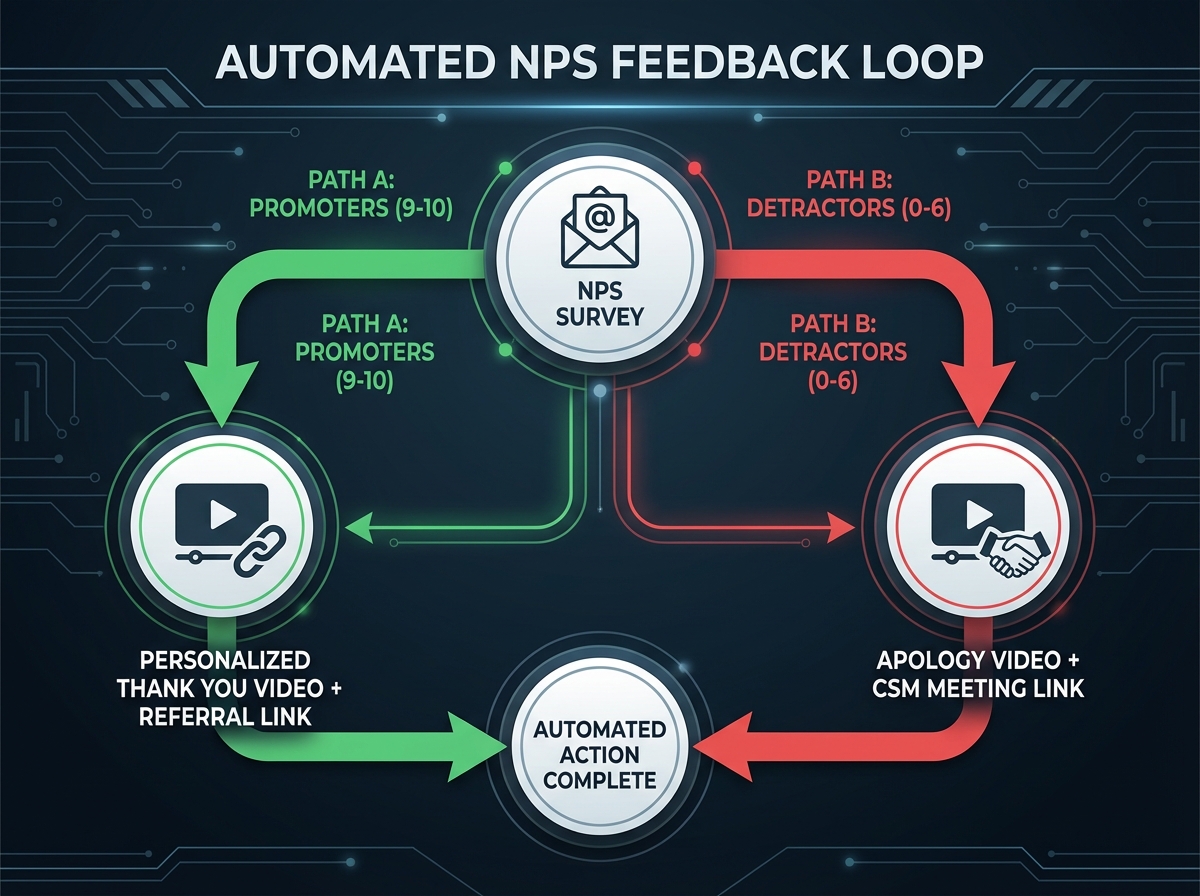
NPS improvement videos further humanize the feedback loop by transforming a standard survey into a personal conversation. When a user receives a video invite from their dedicated CSM or a recognizable brand figure, response rates climb significantly. More importantly, the automation allows for dynamic pathing: promoters receive a thank-you video with a referral incentive, while detractors are immediately met with an apology video and a direct link to book a "rescue" meeting. This real-time responsiveness demonstrates a level of care that text-based systems cannot replicate.
In the Indian BFSI and SaaS sectors, the integration of these videos into WhatsApp journeys has proven particularly effective. By leveraging high-response channels and combining them with personalized video content, brands can close the feedback loop faster and more effectively. The ability to render these videos in under 30 seconds ensures that the follow-up is timely, relevant, and contextually accurate to the user's most recent interaction with the brand.
Sources:
- Elets BFSI: Reimagining Renewal Strategies
- WebEngage: Digital Channels for Retention
- Flowlu: Customer Retention Statistics
Deploying Churn Prevention AI Videos via Customer Health Scoring Automation
The most advanced retention playbooks rely on customer health scoring automation to identify at-risk accounts before they churn. By aggregating leading indicators—such as declining login frequency, unresolved support tickets, or the departure of an executive sponsor—enterprises can assign a real-time health score to every customer. When this score drops below a predefined threshold, it triggers churn prevention AI videos designed to address the specific root cause of the friction.
These proactive customer rescue videos are persona-aware and highly targeted. For example, if a user is struggling with a specific feature, the AI generates a 2-minute personalized training module delivered by a friendly avatar or spokesperson. If the risk is billing-related, the video might offer a tailored discount or a flexible payment plan. This level of precision ensures that the intervention feels like a helpful service rather than a desperate sales pitch, which is essential for maintaining brand equity during sensitive customer moments.
Win-back campaign automation extends this logic to lapsed accounts. By using personalized videos that highlight "what you missed" since the account became inactive—such as new feature launches or performance improvements relevant to their prior usage—brands can reignite interest. These videos often include a time-bound incentive and a one-click reactivation CTA, significantly lowering the barrier to return. Data from 2026 indicates that 71% of consumers expect this level of personalized interaction, and 60% are motivated to make repeat purchases when they receive it.
Sources:
- Aivanta: Personalized Video Use Cases
- DPO India: Consent and DPDPA
- Visla: Video Marketing Trends for 2026
The Architecture of Subscription Retention AI: Security and Integration
At the enterprise level, subscription retention AI functions as a sophisticated orchestration layer that connects the data warehouse to the delivery channel. The architecture begins with signal ingestion from CRMs like Salesforce or Customer Success platforms like Gainsight. These signals feed into a decisioning engine that selects the appropriate video template and dynamic fields based on the user's current lifecycle stage and health score. The resulting JSON schema is then sent to a high-speed rendering farm to produce the final personalized asset.
Security and compliance are non-negotiable components of this architecture. Enterprise-grade solutions must support SSO/SCIM for access management and maintain detailed audit logs for every video generated. Under the DPDP Act, every personalized communication must be backed by verifiable consent, necessitating a robust consent management platform (CMP) integration. Furthermore, ISO 27001 and SOC 2 certifications are essential to ensure that sensitive customer data used for personalization—such as usage metrics or account balances—is encrypted both at rest and in transit.
The delivery phase utilizes signed URLs and secure links to ensure that personalized content is only accessible to the intended recipient. Advanced platforms also provide fallback mechanisms, such as dynamic thumbnails, for email clients that block autoplay. By tracking every interaction—from opens to watch-through rates and CTA clicks—enterprises can correlate video engagement directly with retention outcomes, allowing for continuous optimization of the retention engine through A/B testing and cohort analysis.
Sources:
- Hogan Lovells: India Consent Management Rules
- CommLab India: AI-Powered Video Creation
- WebEngage: Retention and the Big Brand Theory
Measuring the 3.2x Higher Engagement: Implementation and Case Studies
The transition to a video-first retention strategy is best managed through a structured 30-60-90 day rollout. The first 30 days should focus on a pilot stage, such as onboarding, where 2-3 templates are tested against traditional text-based emails. By day 60, the program should expand to include NPS improvement videos and milestone celebrations, introducing omnichannel delivery via WhatsApp. By the 90-day mark, the enterprise can standardize the process, implementing churn prevention AI videos driven by automated health scoring and establishing a Center of Excellence for video personalization.
Real-world applications demonstrate the immense ROI of this approach. For instance, Dainik Bhaskar achieved a 3.2x higher participation rate in their reader activation contest by replacing standard invites with personalized celebrity videos. Similarly, Hero MotoCorp successfully delivered 2.4 million personalized festive greetings, incorporating local dealership details to drive offline service visits. These examples highlight that when personalization is executed at scale, it moves beyond a novelty and becomes a core driver of business growth.
Solutions like TrueFan AI demonstrate ROI through significant reductions in creative production time—saving over 3,800 hours for some clients—and measurable uplifts in customer engagement metrics. By focusing on KPIs such as onboarding task completion, renewal rate improvement, and the delta in health scores post-intervention, CS leaders can build a data-driven case for the continued expansion of personalized video programs. The future of retention is not just about keeping customers; it is about creating advocates through hyper-personalized, value-driven experiences.
Sources:
Sources:
- TrueFan Enterprise Executive Document
- MeitY: Digital Personal Data Protection Act 2023
- SellersCommerce: Video Marketing Statistics
Frequently Asked Questions
How do customer retention personalized videos impact long-term LTV?
Customer retention personalized videos impact LTV by increasing the emotional connection between the brand and the user, leading to higher renewal rates and lower churn. By delivering relevant, timely, and personalized content, brands can reinforce the value of their service, which Mediawide research links to a 306% increase in lifetime value.
Can these video campaigns scale to millions of users simultaneously?
Yes, enterprise-grade platforms are designed for massive scale. For example, TrueFan AI has successfully generated 354,000 unique videos in a single day for Zomato and 2.4 million for Hero MotoCorp. This is achieved through cloud-agnostic GPU farms and real-time APIs that handle high-concurrency rendering requests.
How does the DPDP Act affect personalized video marketing in India?
The DPDP Act requires that all personalized communications be based on explicit, informed consent. Enterprises must ensure they have a robust consent management system in place that logs user preferences and provides clear opt-out mechanisms within every video delivery channel, such as WhatsApp or email.
What data is required to trigger churn prevention AI videos?
Churn prevention AI videos are typically triggered by customer health scoring automation. This involves monitoring data points like login frequency, feature adoption depth, support ticket volume, and billing status. When these indicators suggest a high risk of churn, the system automatically generates a rescue video tailored to the specific friction point.
Is the production effort for personalized videos higher than traditional video?
Actually, it is often lower at scale. While the initial template setup requires effort, AI-driven virtual reshoots and automated rendering eliminate the need for manual editing and multiple shoots. TrueFan AI's enterprise solutions have been shown to save thousands of creative man-hours by automating the localization and personalization process.
How do I measure the success of a lifecycle video marketing automation program?
Success is measured through a combination of engagement metrics (open rates, watch-through rates, CTA clicks) and business outcomes (onboarding completion rates, NPS score shifts, and renewal rate uplifts). A/B testing video against text-based controls is the most effective way to isolate the impact of the video content. See more on lifecycle video marketing automation.