AI sales outreach videos: How enterprise B2B teams drive 3–4x replies with AI personalized prospecting videos at scale
Estimated reading time: ~12 minutes
Key Takeaways
- AI sales outreach videos deliver 3–4x higher reply rates by interrupting patterns and humanizing enterprise outreach at scale.
- Win with persona-specific scripts (30–60s), social proof, and a single, compelling CTA tailored to channels like LinkedIn and WhatsApp.
- Data-driven templates and automation map CRM fields to dynamic video variables for global scale across 175+ languages.
- Governance-first execution aligns with DPDP, consent records, moderation-by-design, and enterprise security standards.
- Instrument ROI via retention, stakeholder penetration, pipeline velocity, and win-rate lift to guide iteration.
The modern B2B landscape is defined by extreme noise and diminishing returns from traditional text-based sequences. As we navigate the 2026 fiscal year, enterprise revenue teams are pivoting toward AI sales outreach videos to break through saturated inboxes. By deploying AI personalized prospecting videos, high-growth organizations are achieving a 3–4x lift in reply rates compared to static outreach, fundamentally altering the economics of the sales development representative (SDR) function.
This strategic shift is not merely about adding a visual element; it is about the industrialization of personalization. For enterprise B2B teams selling into complex, multi-stakeholder buying committees, the ability to deliver a bespoke, high-fidelity video message to every decision-maker—without increasing headcount—is the ultimate competitive advantage. Platforms like TrueFan AI enable this transition by bridging the gap between human authenticity and algorithmic scale.
The Strategic Shift to Multi-Stakeholder Video Engagement
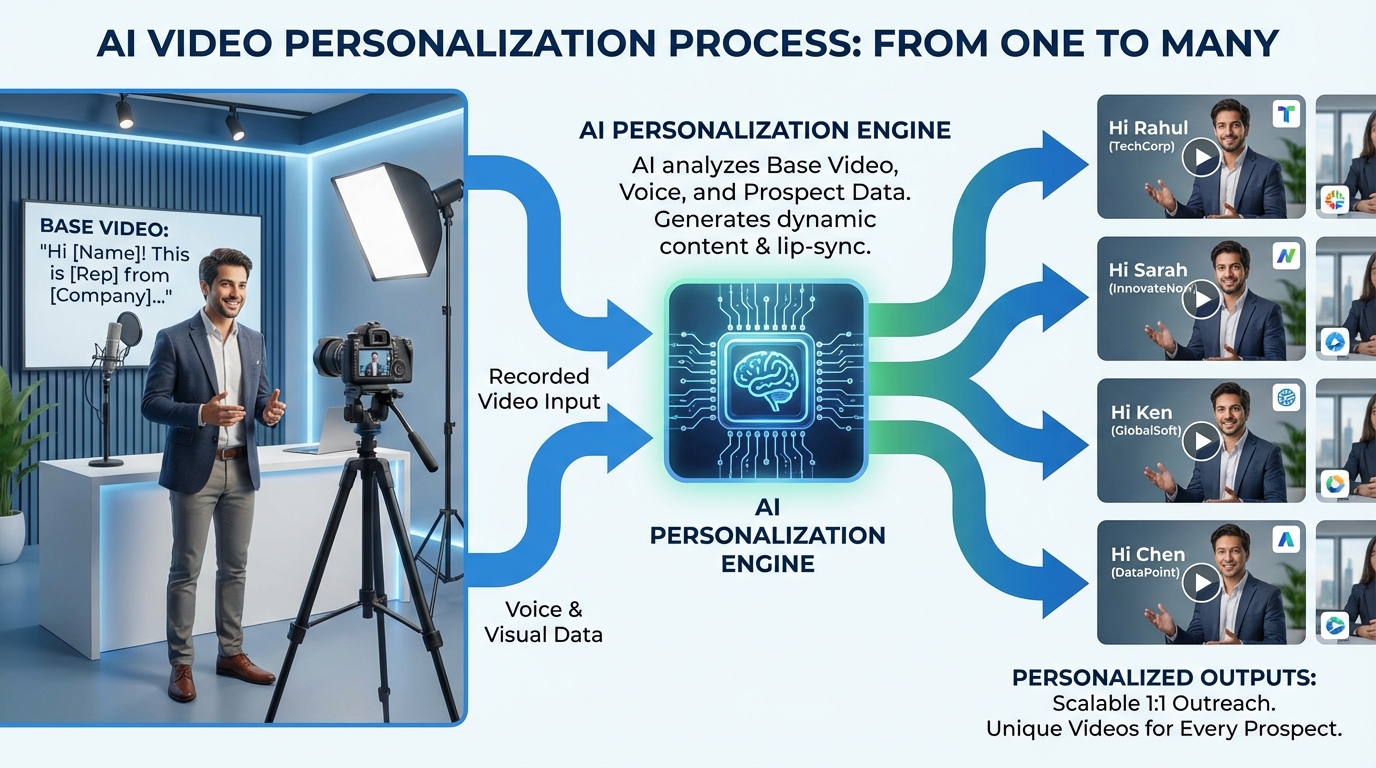
In the current enterprise environment, the average buying committee has expanded to 11+ stakeholders. Traditional “spray and pray” tactics fail because they lack the nuance required to engage diverse personas—from the CFO concerned with unit economics to the CIO focused on integration risk. AI sales outreach videos solve this by allowing a single base shoot to be dynamically rendered into thousands of unique variants, each tailored to the specific pain points of the recipient.
The intent of this blueprint is to provide RevOps leaders and sales executives with a comprehensive framework for operationalizing B2B video personalization scale. We will explore the technical architecture, channel playbooks, and governance models required to drive meeting velocity and pipeline acceleration in a “video-first” world.
Sources:
- TrueFan AI: 3–4x reply lift benchmarks and outreach guidance
- TrueFan AI: Personalized prospecting video scripts
- TrueFan AI: Enterprise scale and 175+ languages
What are AI sales outreach videos and why they outperform text in B2B
To understand the efficacy of AI sales outreach videos, one must first define the technical format. Unlike traditional video marketing, which relies on a one-to-many broadcast model, these assets are hyper-personalized at the point of generation. A spokesperson—typically an Account Executive or a brand ambassador—records a 5–15 minute “base asset.” AI then utilizes photorealistic lip-syncing and voice cloning to generate unique speech patterns for every prospect in the database.
The performance delta between video and text is rooted in “pattern interrupt.” In an era where 2026 projections indicate that 92% of B2B outreach is automated text, a video thumbnail featuring the prospect’s name and company logo acts as a powerful psychological trigger. This human presence outcompetes commodity email by establishing immediate trust and demonstrating a level of effort that text simply cannot replicate.
The India-Specific Advantage: WhatsApp and High-Visibility Channels
In the Indian enterprise market, the shift toward LinkedIn video outreach and WhatsApp Business API has been transformative. Research indicates that WhatsApp currently maintains the highest open and click-through rates among all push channels in India-focused tech stacks. By delivering AI sales outreach videos via WhatsApp, sales teams bypass the “cluttered inbox” problem entirely, reaching buyers on the platform where they are most active.
Furthermore, B2B relationship videos delivered through these high-intent channels foster a sense of proximity. When a prospect receives a video that addresses their specific regional challenges or industry-specific pain points in their preferred language, the likelihood of a high-value response increases exponentially. This is particularly critical for Tier-1 accounts where relationship-building is the primary driver of deal velocity.
Sources:
- MoEngage: WhatsApp marketing performance insights
- Times of India: Indian business messaging preferences
- TrueFan AI: Reply lift data and channel playbooks
AI personalized prospecting videos that book meetings: Scripts and Structure
The success of AI personalized prospecting videos hinges on the brevity and relevance of the script. In 2026, the optimal runtime for a prospecting video is 30–60 seconds. Anything longer risks losing the prospect’s attention before the call to action (CTA). The structure must be persona-specific, addressing the unique anxieties of the buyer.
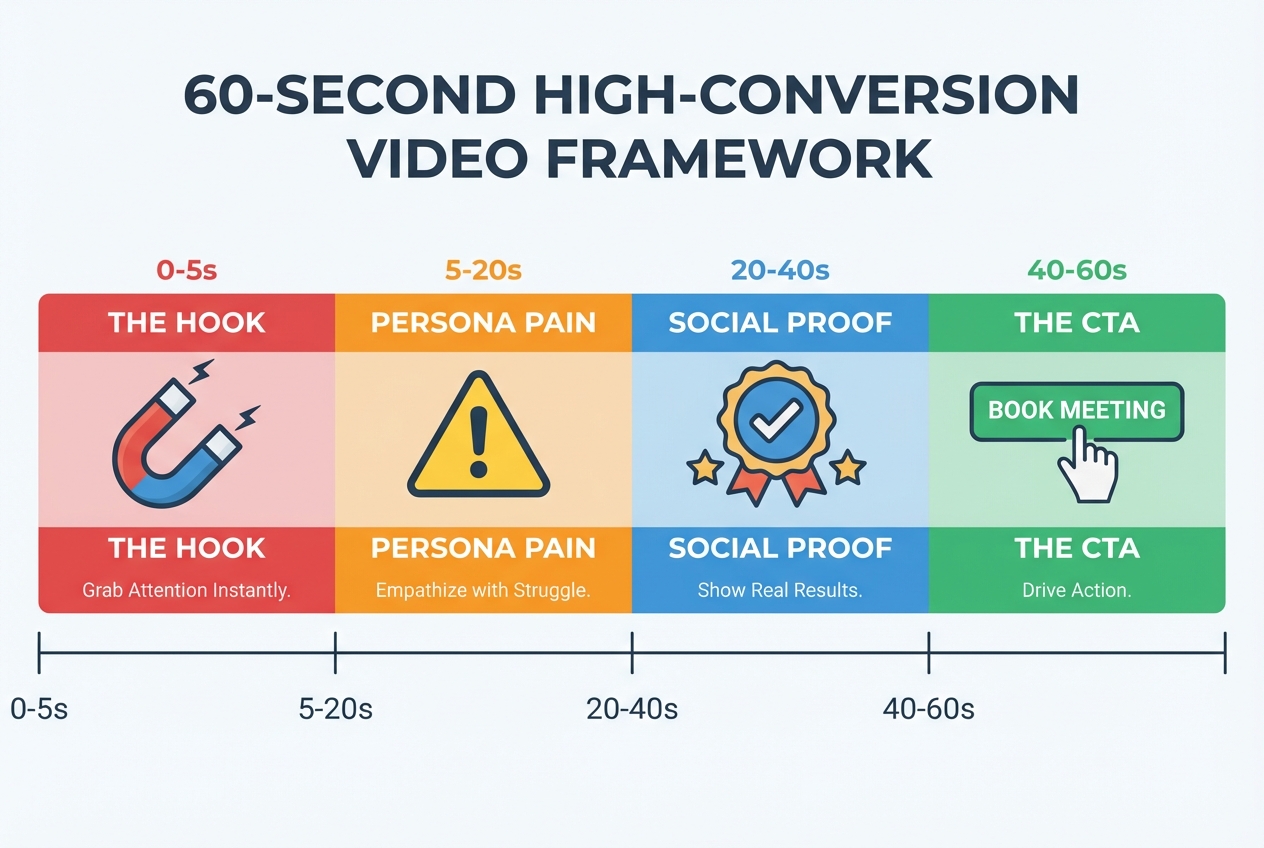
The 60-Second High-Conversion Framework
- 0–5s The Hook: “Hi {FirstName} at {Company}...” This must be accompanied by a context signal, such as a reference to recent funding, a new product launch, or a specific regional expansion.
- 5–20s Persona Pain: Connect the solution to the role. For a CFO, focus on TCO and unit economics. For a Business Leader, focus on revenue velocity and market share.
- 20–40s Social Proof: Mention a relatable industry case study. Use dynamic overlays to show the prospect’s logo alongside a key metric (e.g., “We helped {Competitor} reduce churn by 22%”).
- 40–60s The CTA: A single, clear ask. “Are you open to a 15-minute diagnostic?” Include a safety nudge, such as “Reply STOP to opt out,” to remain compliant with evolving DPDP (Digital Personal Data Protection) norms.
Channel-Optimized Variants
For LinkedIn video outreach, the video should be square or vertical with burned-in captions, as many users browse with sound off. In contrast, email delivery requires a high-quality GIF thumbnail to entice the click. For WhatsApp catalog video marketing, the video should be even shorter (20–30 seconds) and hyper-direct, as the platform favors rapid, conversational exchanges. This multi-channel approach ensures that your personalized sales pitch AI reaches the prospect wherever they are most receptive.
Sources:
B2B video personalization scale: Data, Templates, and Automation
Achieving B2B video personalization scale requires a robust data architecture. Enterprise teams must map their CRM fields (Salesforce, HubSpot, or Microsoft Dynamics) to dynamic variables within the video template. These variables include not just text (name, company) but also visual assets like logo URLs, industry-specific background clips, and even proposal snippets.
Automation Architecture for Enterprise Teams
The workflow for sales enablement video automation follows a structured path:
- Base Shoot: A high-quality capture of the spokesperson.
- Template Design: Defining where the dynamic variables (audio and visual) will be injected.
- Variant Rules: Logic-based triggers (e.g., If {Industry} = “BFSI”, then use “Security” value prop).
- Batch Generation: Utilizing APIs to render thousands of videos daily.
- QA and Launch: Automated quality checks for brand alignment and compliance.
TrueFan AI's 175+ language support and Personalised Celebrity Videos allow global enterprises to localize their outreach instantly. Whether targeting a CTO in Bangalore or a Procurement Head in Berlin, the AI ensures the accent, language, and cultural nuances are perfectly aligned. This level of localization was previously impossible at scale, but in 2026, it is a standard requirement for global B2B operations.
Sources:
- TrueFan AI: Personalization at scale
- TrueFan AI: Batch video creation automation
- TrueFan AI: AI video generator APIs
Sales enablement video automation across the enterprise funnel
While prospecting is the most common use case, sales enablement video automation provides value across the entire customer journey. By integrating video into the mid and late stages of the funnel, teams can significantly improve win rates and reduce the length of the sales cycle.
Demo Video Personalization and Proposal Explainers
After a discovery call, AEs can auto-generate demo video personalization assets. These are 2-minute recaps that highlight the specific features discussed, using dynamic chapters to guide the prospect through the value proposition. Similarly, proposal video automation allows for the creation of short explainers that summarize scope, pricing, and milestones. These videos are particularly effective when shared with stakeholders who were not present on the initial calls, ensuring the “why us” narrative remains intact.
Deal Acceleration and B2B Relationship Videos
Deal acceleration videos late-stage strategies are triggered by specific risk signals or milestones. For example, if a deal stalls in the “Legal Review” stage, an automated video from the Head of Security addressing compliance and ISO controls can unblock the bottleneck. Post-sale, B2B relationship videos celebrate “go-live” dates, QBR (Quarterly Business Review) invitations, and renewal nudges. These touchpoints humanize the enterprise relationship, leading to higher ACV (Annual Contract Value) and expansion opportunities.
Sources:
- TrueFan AI: Enterprise case studies and use cases
- TrueFan AI: Multi-stakeholder engagement capabilities
Account-based video marketing orchestration and Governance
In account-based video marketing (ABM), the level of personalization is tiered based on account value. For Tier A accounts, multi-stakeholder video engagement playbooks involve creating unique videos for every key decision-maker. For Tier B and C accounts, teams use “1:few” clusters based on industry or region, maintaining high relevance without the overhead of 1:1 creative production.
Personalized Sales Pitch AI: Governance and Brand Safety
As enterprises adopt personalized sales pitch AI, governance becomes paramount. In the Indian context, alignment with the DPDP Act is non-negotiable. This includes ensuring lawful basis for processing, maintaining granular consent records, and providing clear opt-out mechanisms within the video experience.
Enterprise-grade platforms must offer:
- Consent-First Models: Ensuring video generation only occurs for opted-in prospects.
- Moderation-by-Design: Prohibiting the generation of off-brand or non-compliant content.
- Secure Data Processing: Adhering to ISO 27001 and SOC 2 standards to protect sensitive prospect data.
- Content Approvals: Allowing marketing and legal teams to review templates before they are deployed at scale.
Sources:
- DPO India: DPDP consent expectations
- Factors.ai: Top ABM tooling in India
- Consent.in: Telemarketing regulations and DPDP
Measuring ROI: Pipeline, Velocity, and Win Rates
Solutions like TrueFan AI demonstrate ROI through a combination of top-funnel metrics and bottom-line impact. Beyond simple “play rates,” enterprise teams must instrument their analytics to track stakeholder coverage and stage progression time.
Key Metrics to Instrument in 2026
- Engagement Quality: Tracking 50% and 100% video retention rates to identify high-intent prospects.
- Pipeline Velocity: Measuring the reduction in days-to-close for deals influenced by deal acceleration videos.
- Stakeholder Penetration: The number of unique contacts within a target account who have engaged with a personalized video.
- Win Rate Lift: Comparing the close rates of video-enabled sequences against traditional text-only control groups.
By utilizing these data points, RevOps leaders can continuously iterate on their scripts and delivery channels. For instance, if data shows that WhatsApp follow-ups have a 40% higher reply rate than email for BFSI prospects in West India, the automation rules can be adjusted in real-time to prioritize that channel.
Sources:
Implementation Blueprint: 30-Day Pilot to Scale
Transitioning to an AI sales outreach videos strategy requires a structured implementation plan. Most enterprise teams can move from a pilot to full-scale automation within 30 days.
- Week 1 (Foundation): Select 50–100 high-priority accounts. Define the personas (CFO, CIO, etc.) and their primary pain points. Capture the base shoot and map out the dynamic variables.
- Week 2 (Build): Configure the variant rules and language packs. Batch-generate the first 1,000 videos and conduct a thorough QA for brand and DPDP compliance.
- Week 3 (Launch): Activate the LinkedIn video outreach and WhatsApp cadences. Monitor initial reply rates and A/B test different hooks.
- Week 4 (Scale): Review the performance data. Enable API-triggered real-time journeys, such as an automated “Thank You” video sent within 30 seconds of a demo request.
Proof Points: Indian Enterprise Success Stories
- Goibibo: Leveraged personalized WhatsApp nudges to drive funnel conversions, resulting in a significant uplift in cross-sell opportunities.
- Zomato: Generated 354,000 personalized videos in a single day for Mother’s Day, demonstrating the massive scale achievable with AI.
- Hero MotoCorp: Deployed 2.4 million personalized videos to drive service camp footfall, proving the efficacy of video for high-volume B2B2C relationship management.
- Cipla: Strengthened B2B relationships with physicians through personalized “Doctor’s Day” videos, highlighting the power of video for professional engagement.
Conclusion: The Future of Enterprise Prospecting
The era of generic, high-volume text outreach is ending. As we move through 2026, the organizations that dominate their markets will be those that master B2B video personalization scale. By combining human authenticity with the efficiency of sales enablement video automation, enterprise teams can finally achieve the “holy grail” of sales: 1:1 personalization at 1:many scale.
Whether you are looking to revitalize your LinkedIn video outreach or implement a “WhatsApp-first” strategy in the Indian market, the path forward is clear. The integration of AI sales outreach videos into your revenue engine is no longer an experiment—it is a strategic necessity for driving 3–4x replies and securing long-term pipeline health.
Sources:
- TrueFan AI: Enterprise capability overview
- TrueFan AI: Case study hub
- TrueFan AI: Batch automation guide
Recommended Internal Links
- Deep-dive enterprise playbook for AI sales outreach videos and tactics to drive 3–4x reply lifts
- WhatsApp Business API video automation and compliance best practices for India-focused outreach
- Channel specs and creative blueprints for high-converting WhatsApp video messages
- Late-stage deal acceleration plays and stakeholder nudges aligned to enterprise procurement
- Multi-stakeholder urgency mapping and procurement-focused video strategies to speed consensus
Frequently Asked Questions
How do AI sales outreach videos handle different accents and languages?
Advanced platforms like TrueFan AI support over 175 languages and utilize sophisticated voice cloning technology to ensure that the AI-generated speech matches the original speaker's tone and accent, providing a seamless and authentic experience for global prospects.
Is the use of AI personalized prospecting videos compliant with India's DPDP Act?
Yes, provided the implementation follows a consent-first model. This includes obtaining explicit consent for communication, providing clear opt-out options (like a “Reply STOP” line), and ensuring that data processing is limited to the stated purpose of the outreach.
Can I integrate these videos with my existing CRM like Salesforce or HubSpot?
Absolutely. Enterprise-grade video AI solutions offer robust APIs and native integrations that allow you to trigger video generation directly from your CRM workflows, ensuring that your sales enablement video automation is tightly coupled with your existing sales stack.
What is the typical “render time” for a personalized video?
For real-time triggered experiences, the render time is often sub-30 seconds. For large-scale batch generation (thousands of videos), the system processes the queue in the background, allowing for rapid deployment across large databases.
Do I need professional video equipment for the “base shoot”?
While high-quality equipment is recommended for the best results, many successful AI sales outreach videos are created using high-end smartphone cameras or standard webcams, provided the lighting and audio are clear. The AI focuses on the spokesperson's face and voice to create the personalized variants.