AI Crisis Prevention Marketing: How Enterprises Use Sentiment-Driven Customer Rescue and Proactive Support Videos in 2026
Estimated reading time: ~11 minutes
Key Takeaways
- Shift from reactive to proactive CX using sentiment-driven detection and timely interventions to prevent churn and PR crises.
- A four-layer framework—signals, risk scoring, orchestration, and learning—drives measurable impact.
- Proactive support videos on WhatsApp deliver empathy at scale, improving CSAT and brand reputation.
- Industry playbooks for e-commerce, telco, fintech, and airlines show proven, automated rescue patterns.
- A 90-day roadmap with KPIs like Sentiment Delta and Save Rate operationalizes AI crisis prevention marketing.
In the hyper-competitive landscape of 2026, the traditional reactive model of customer service has become an operational liability. Enterprises are no longer waiting for a complaint to surface; they are utilizing AI crisis prevention marketing to intercept dissatisfaction before it crystallizes into churn or public brand damage. By the time a customer reaches for their phone to tweet a grievance, the window for an optimal “save” has already closed.
Today’s market leaders in India and beyond have shifted toward a predictive posture. They leverage sophisticated customer mood detection AI to monitor real-time signals across every touchpoint—from WhatsApp chat latencies to app crash logs. Platforms like TrueFan AI enable these organizations to transform these raw risk signals into high-impact, personalized video interventions that restore trust in seconds. This strategic evolution from “damage control” to “preemptive rescue” is the new benchmark for brand reputation protection in a digital-first economy.
1. Defining the Architecture of AI Crisis Prevention Marketing 2026
To master AI crisis prevention marketing 2026, enterprise leaders must first align on the technical definitions that govern this proactive ecosystem. This is not merely “automated support”; it is a sophisticated orchestration of emotional intelligence and predictive modeling.
The Core Components of Proactive Intervention
Customer Mood Detection AI
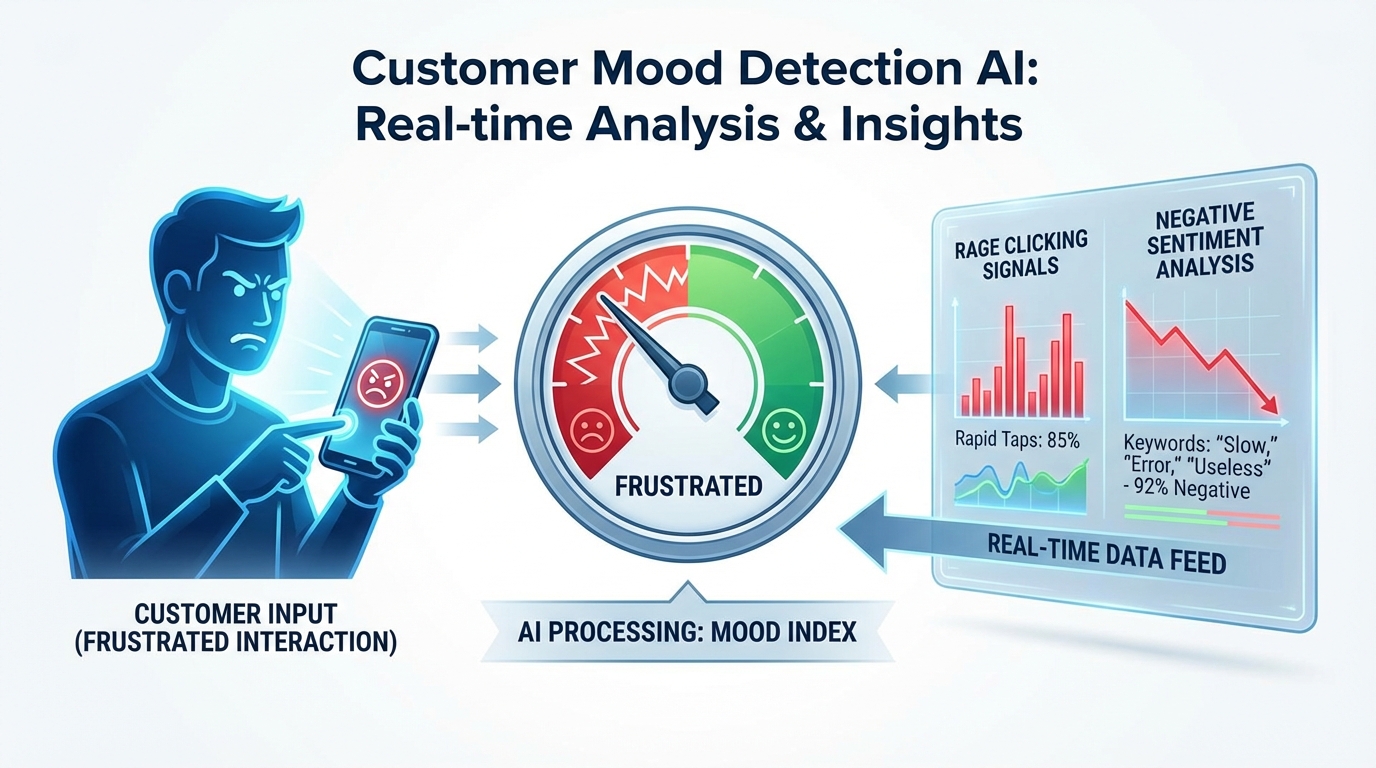
This represents the sensory layer of the system. Unlike basic sentiment analysis of the past, 2026-era models infer emotional state and intent from a multi-modal data stream. This includes text-based ticket analysis, speech emotion recognition (SER) from IVR transcripts, and behavioral signals such as “rage clicking” within an app. The output is a dynamic sentiment score that dictates the urgency and tone of the response. See the sentiment-driven crisis prevention 2026 guide.
At-Risk Customer Identification
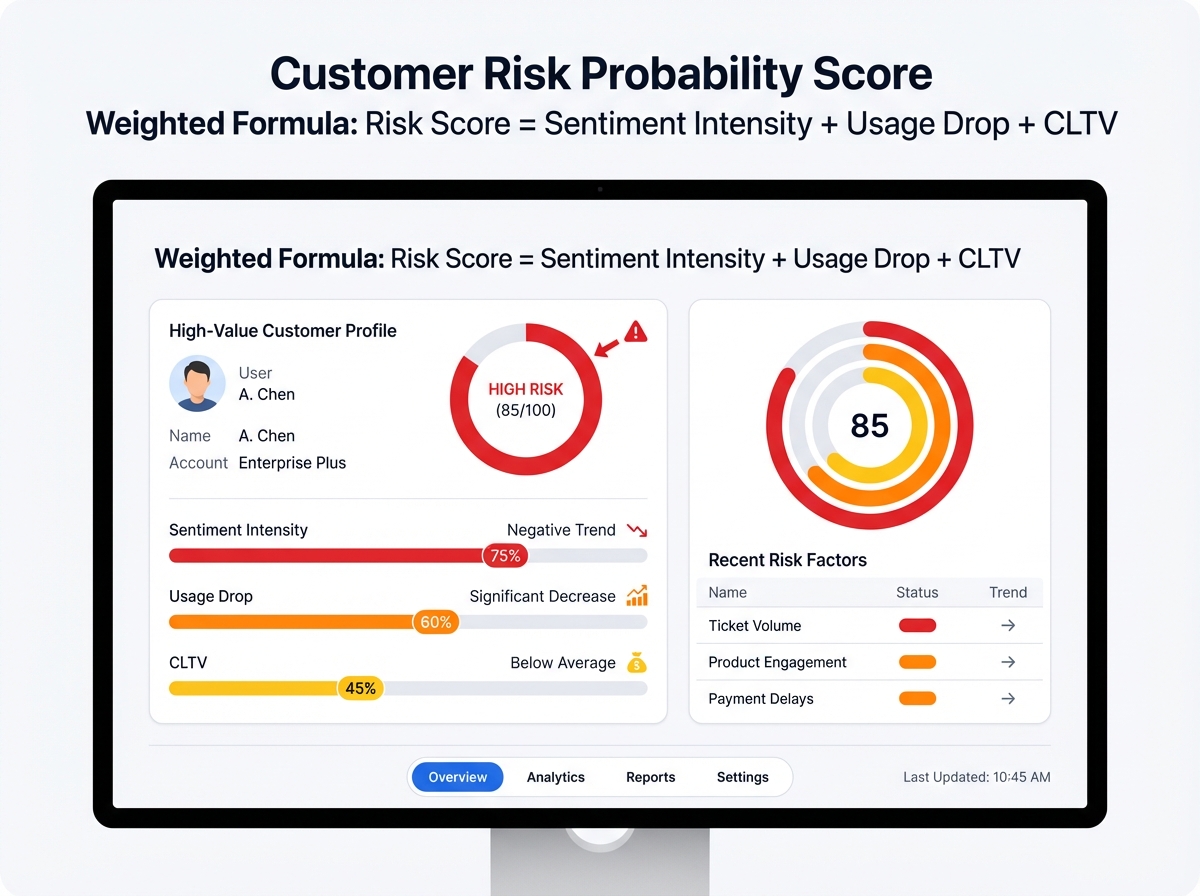
This is the logic engine that combines sentiment data with financial and behavioral drivers. By merging a customer’s lifetime value (CLV) and loyalty status with recent service incidents—such as a failed payment or a delayed delivery—enterprises can generate a “Risk Probability Score.” This score allows teams to prioritize high-value rescues that have the greatest impact on the bottom line.
Predictive Dissatisfaction Management
This practice involves forecasting the exact moment a customer is likely to reach a breaking point. For instance, if a logistics provider detects a third ETA slip for a premium shipment, the system forecasts a 90% probability of a formal complaint within the next two hours. Predictive dissatisfaction management triggers an immediate intervention to “reset” the customer's expectations before that complaint is ever filed. Learn more in predictive analytics for customer retention.
Complaint Prevention Automation
This refers to the policy-driven triggers that execute the rescue. When a high-risk case is identified, the system automatically routes the customer into a personalized workflow. This might include a fee waiver, a priority callback, or a proactive support video that explains the situation with radical transparency.
Preventive Service Recovery
The ultimate goal is to deliver the remedy—be it a credit, a rebooking link, or a sincere apology—before the customer even asks for it. This reduces customer effort to near-zero and transforms a potential crisis into a demonstration of operational excellence.
Sources:
- Haptik: WhatsApp proactive engagement and retention at scale
- Shadowfax: Proactive post-purchase support reduces returns and complaints
2. 2026 India Market Signals: The Urgency of Proactive Engagement
The Indian enterprise sector has become the global testing ground for AI crisis prevention marketing. With a population-scale digital infrastructure and a consumer base that demands instant resolution, the cost of being reactive is higher than ever.
Real-Time Sentiment as a Competitive Edge
In early 2026, we have seen a definitive shift in how Indian brands operationalize customer signals. For example, in the insurance sector, companies like ACKO have pioneered the use of sentiment analysis and pattern recognition to enable context-rich, proactive interactions. This allows them to intercept dissatisfaction during the claims process—the most volatile stage of the customer journey—ensuring that brand reputation protection is maintained through transparency. Explore the insurance CLM video automation playbook.
Similarly, in the consumer goods space, Blue Tokai has integrated real-time sentiment analysis to guide proactive improvements. By appointing AI-driven “Chief Listening Officers,” these brands are proving that the ability to listen at scale is only valuable if it is paired with the ability to act at scale.
The Telco and D2C Blueprint
The Indian telecom stack now utilizes a “Customer 360” approach, where AI personalization is tied directly to network experience. If a user in a specific geography experiences a dip in Quality of Experience (QoE), the system doesn't wait for a support ticket. Instead, it delivers a retention offer or a status update via WhatsApp, specifically tailored to that user's historical usage patterns.
For D2C brands, the WhatsApp Business API has evolved from a marketing channel into a technical edge for preventive service recovery. By using proactive nudges and faster resolutions, these brands are seeing significant satisfaction score improvement and a marked reduction in customer acquisition costs (CAC) by focusing on the “leaky bucket” of churn. Learn more about WhatsApp catalog video marketing tactics.
Sources:
- Haptik Case Study: Jio served 42M+ customers on WhatsApp while driving CSAT
- YourStory: Reimagining insurance CX with AI and sentiment analysis
- YourStory: Blue Tokai appoints AI “Chief Listening Officer”
- Communications Today: AI personalization and Customer 360 for telco retention
3. The Core Framework: From Early Signals to Measurable Impact
To implement a successful AI crisis prevention marketing strategy, enterprises must build a four-layer framework that moves from data ingestion to emotional resolution.
Layer 1: Signals and Detection
The foundation of the framework is the aggregation of disparate data points. This includes:
- Direct Inputs: Support tickets, chat logs, and IVR transcripts.
- Indirect Signals: Social media mentions, app crash logs, and repeated “Where is my order?” (WISMO) queries.
- Methods: Utilizing NLP for sentiment analysis and speech emotion recognition for voice calls. Topic modeling is used to identify the specific intent behind a customer's frustration.
- Output: The customer mood detection AI assigns a risk tier (Low, Medium, or High) and a sentiment polarity score.
Layer 2: Risk Scoring and Prioritization
Once a signal is detected, it must be contextualized. A customer who is “annoyed” but has a low CLV might be routed to an automated chat, whereas a “furious” platinum-tier customer requires an immediate sentiment-driven customer rescue.
The scoring logic follows a weighted formula: Risk Score (S) = w1(Sentiment Intensity) + w2(Usage Drop) + w3(Issue Severity) + w4(CLTV) + w5(Recent Failures).
This allows for predictive dissatisfaction management, where the system sets an SLA window—often as short as 15 minutes—for high-risk interventions. Learn more in predictive analytics for customer retention.
Layer 3: Actioning and Orchestration
This is where the rescue takes place. The system triggers empathy-driven responses based on the cause of the risk.
- Proactive Support Videos: If the issue is technical (e.g., a billing error), a video explainer is generated.
- Preemptive Retention Videos: If the issue is a service failure (e.g., a flight delay), a video featuring a brand ambassador or a personalized message is sent to offer a remedy.
TrueFan AI’s 175+ language support and Personalised Celebrity Videos allow enterprises to execute this at a scale that was previously impossible, ensuring that the message resonates culturally and linguistically with the recipient.
Layer 4: Feedback and Learning
The final layer focuses on emotional engagement tracking. Enterprises measure how customers respond to the intervention:
- Did they watch the full video?
- Did their sentiment shift in the follow-up survey?
- Was there a reduction in the escalation rate?
This data is fed back into the model to refine the “Tone Ladder” and improve future negative sentiment mitigation efforts. Read more in NPS video automation 2026.
Sources:
- Bitrix24: 2026 CX success KPIs emphasize proactive engagement
- TrueFan AI: Scalable AI video creation guide
4. Industry Playbooks: Preemptive Intervention Recipes by Trigger
To move from theory to practice, let’s examine how AI crisis prevention marketing is applied across different high-stakes industry scenarios. Solutions like TrueFan AI demonstrate ROI through these specific, automated workflows.
Scenario A: The E-commerce Delivery Delay
The Trigger: An ETA slip of more than 12 hours combined with a “Where is my order?” query that shows high negative sentiment.
The Intervention: Instead of a generic “we are sorry” email, the customer receives a proactive support video on WhatsApp. The video shows the real-time location of their package, explains the reason for the delay (e.g., weather in a specific hub), and provides an instant “one-tap” choice between a shipping refund or a discount on their next order.
The Outcome: A reduction in returns and a significant satisfaction score improvement despite the service failure.
Scenario B: The Telco Network Outage
The Trigger: A spike in network QoE drops in a specific pin code, paired with rising negative social sentiment from high-value users in that area.
The Intervention: Preemptive retention videos are dispatched to affected users. The video acknowledges the outage, provides a countdown timer for the fix, and automatically applies a data credit to the account.
The Outcome: Brand reputation protection is achieved by controlling the narrative before it becomes a trending topic on social media.
Scenario C: The Fintech Billing Dispute
The Trigger: A customer uses the word “hidden fee” or “dispute” in a chat, and the customer mood detection AI flags high frustration.
The Intervention: Complaint prevention automation triggers an empathy-first explainer video. The video breaks down the specific transaction, explains the policy, and—if the customer is a long-term user—offers a one-time waiver.
The Outcome: Preventive service recovery that avoids the high cost of a formal regulatory complaint or a manual support escalation. Explore BNPL default prevention campaigns.
Scenario D: The Airline Flight Delay
The Trigger: A flight delay exceeding 90 minutes for an “Elite” tier traveler, detected via the flight operations system.
The Intervention: A sentiment-driven customer rescue via a personalized video. The video includes a sincere apology, a QR code for a lounge voucher, and a direct link to rebook on an earlier flight.
The Outcome: High retention of premium travelers who feel “seen” and valued during a stressful travel event.
Sources:
- Ginesys: WhatsApp Business API as a retention edge
- TrueFan AI: AI video enhancement for support use cases
5. Creative and Empathy Design: The "Tone Ladder" System
In AI crisis prevention marketing, the how is just as important as the what. A generic response to a high-emotion situation can actually worsen the crisis. This is why enterprises are adopting “Emotional Intelligence Campaigns” driven by a structured tone ladder.
The Tone Ladder for Empathy-Driven Responses
- Level 1: Reassure and Guide (Low Risk): Used for minor delays or “how-to” confusion. The tone is helpful, upbeat, and focused on quick resolution.
- Level 2: Acknowledge and Solve (Medium Risk): Used for repeated minor issues. The tone shifts to professional accountability, acknowledging the inconvenience.
- Level 3: Apologize and Remedy (High Risk): Used for major service failures or high-value customer frustration. The tone is deeply empathetic, taking full ownership and offering immediate, high-value compensation.
Scripting for Impact
A successful proactive support video follows a specific 30-second blueprint:
- 0-3 Seconds: Immediate personalization (Name + specific issue).
- 3-10 Seconds: The “Contextual Truth” (Acknowledge exactly what went wrong).
- 10-20 Seconds: The Remedy (What has already been done to fix it).
- 20-30 Seconds: Choice and Control (Two clear CTAs for the customer to choose their preferred resolution).
By using batch video creation automation, brands can iterate these scripts daily. If a specific “apology line” isn't resonating—as indicated by emotional engagement tracking—the system can perform virtual reshoots to update the creative across millions of personalized variants without a new production cycle.
Sources:
- TrueFan AI: Batch video creation automation for enterprise
- TrueFan AI: Case studies on enterprise video engagement
6. Implementation Roadmap: From Pilot to Enterprise Scale
Transitioning to a proactive model requires a disciplined implementation strategy. Most enterprises can achieve a functional “rescue” loop within 90 days by following this roadmap.
Phase 1: Data Plumbing and Trigger Definition (Weeks 1-4)
The first step is wiring the customer mood detection AI into existing data streams (CRM, Ticketing, App Logs). Enterprises must define the “High/Medium/Low” risk thresholds and select two high-friction journeys—such as “Late Delivery” or “Failed KYC”—to pilot.
Phase 2: Creative Asset Development (Weeks 5-8)
During this phase, the empathy-driven responses are drafted and the video templates are built. This includes securing brand ambassador permissions or designing the virtual agent personas. Complaint prevention automation rules are set up to ensure that the right video goes to the right customer at the right time. See personalised video and celebrity endorsement for SaaS.
Phase 3: Controlled Launch and Optimization (Weeks 9-12)
The system is launched as a 50/50 split test against standard text-based notifications. Teams monitor the satisfaction score improvement and the reduction in escalation rates. Using emotional engagement tracking, the creative is refined to ensure maximum watch-through rates and sentiment uplift. Learn more in NPS video automation 2026.
Measuring Success in 2026
The KPIs for AI crisis prevention marketing go beyond simple resolution times. Enterprises now focus on:
- Sentiment Delta: The change in customer mood from the initial signal to the post-intervention survey.
- Save Rate: The percentage of at-risk customers who remain active 30 days after the intervention.
- Social Share of Voice: The ratio of positive to negative mentions during a service incident.
- Friction Reduction: The decrease in the number of steps a customer must take to resolve an issue.
Ready to transform your CX from reactive to proactive?
See how TrueFan AI powers AI crisis prevention marketing for your team. Book a 30-minute demo to receive your 3-week pilot blueprint and start launching preemptive retention videos that protect your brand and delight your customers.
Book Your Demo Now
Recommended Internal Links
- Sentiment-Driven Crisis Prevention 2026: Save Customers Fast
- Predictive Analytics Customer Retention: 2026 Strategies
- WhatsApp Catalog Video Marketing: Tactics for 2026
- NPS Video Automation 2026: Boost Satisfaction Scores
- DPDP Compliant Personalization: Privacy-First Marketing
- Interactive Video Data Capture: DPDP-Compliant 2026
- Insurance CLM Video Automation India: Boost ROI in 2026
- BNPL Default Prevention Campaigns: Proven Retention Tips
- Personalised Video & Celebrity Endorsement for SaaS
Frequently Asked Questions
How does customer mood detection AI work in real-time?
It utilizes multi-modal NLP and speech emotion recognition to analyze text and voice inputs. By comparing current interactions against historical “frustration patterns,” the AI can assign a sentiment score and urgency level within milliseconds of a signal being received.
How do I set complaint prevention automation triggers?
Triggers are set based on a combination of event data (e.g., a 24-hour delay) and sentiment signals. You define business rules that say: “If [Event X] occurs AND [Sentiment] is below [Threshold Y], then launch [Intervention Z].”
Can proactive support videos really reduce churn?
Yes. Data from 2026 shows that customers who receive a personalized video intervention are 40% more likely to stay with a brand after a service failure compared to those who receive a standard automated email. TrueFan AI’s enterprise deployments have shown that the “human touch” of video, even when automated, significantly de-escalates tension.
Is this compliant with India’s DPDP Act?
Enterprise-grade solutions are built with “privacy by design.” This includes PII encryption, consent-first communication models, and full audit trails for every automated intervention, ensuring alignment with the latest data protection principles. See DPDP-compliant personalization strategies and interactive video data capture.
What is the ROI of predictive dissatisfaction management?
The ROI is measured through three primary buckets: reduced support operational costs (fewer tickets), increased customer lifetime value (lower churn), and brand reputation protection (avoiding PR crises). Most enterprises see a positive ROI within the first six months of a full-scale rollout.