AI crisis communication tools 2026: Enterprise playbook for rapid, video-first brand recovery in India
Estimated reading time: ~16 minutes
Key Takeaways
- Speed is decisive: The response window is ~15 minutes; deploy automated detection and pre-approved playbooks to cut time-to-first-message.
- Video-first empathy wins: Personalized leadership videos in local languages outperform text for acknowledgment, clarity, and trust.
- India-first compliance: Orchestrate WhatsApp, SMS (TRAI DLT), and IVR within DPDP and labeling norms to preserve trust and avoid penalties.
- Closed-loop recovery: Track sentiment delta, NPS lift, and conversion recovery to move from containment to trust rebuilding.
- Operationalize with playbooks: Run a 30/60/90 rollout, tabletop drills, and multilingual templates to make the AI War Room production-ready.
In the volatile digital ecosystem of 2026, the traditional “golden hour” for crisis response has evaporated, replaced by a 15-minute window where brand reputation is either fortified or fundamentally fractured. AI crisis communication tools 2026 have emerged as the essential enterprise infrastructure for navigating this high-velocity landscape, where synchronized disinformation and sophisticated synthetic media can erode decades of brand equity in a single afternoon. For Chief Marketing Officers (CMOs) in India, the challenge is no longer just about “what” to say, but how to deploy AI-powered damage control that is instantaneous, empathetic, and localized across a billion-person market.
TL;DR: The 2026 Crisis Recovery Framework
- The Velocity Shift: 2026 crises are accelerated by deepfakes and misinformation; enterprises need AI crisis communication tools 2026 with real-time sentiment monitoring to cut time-to-first-message and contain reputation risk.
- The Modern Stack: A robust recovery architecture integrates monitoring, automated decisioning, and crisis engagement automation to trigger emergency stakeholder video messages across fragmented channels.
- Video-First Empathy: Crisis response video personalization from credible leaders in a stakeholder’s preferred language significantly outperforms text in acknowledgment, empathy, and clarity.
- India-First Operations: Rapid response marketing automation India must span WhatsApp Business, SMS (TRAI DLT), and IVR while complying with the DPDP Act and labeling AI-generated content.
- Measurable Recovery: Orchestrate automated brand recovery campaigns over a 14–90 day cadence to move from containment to trust rebuilding automation using sentiment delta and NPS lift as primary KPIs.
- Strategic Rollout: Start with a 30/60/90-day pilot focusing on high-risk scenarios, multilingual messaging, and tabletop drills with legal approvals baked into the workflow.
1. The 2026 Crisis Landscape: Speed, Scale, and Synthetic Threats
The threat model for Indian enterprises in 2026 has undergone a tectonic shift, characterized by the weaponization of generative AI to create “coordinated rumor cascades.” Recent data indicates that over 70% of corporate crises in 2026 now involve some form of synthetic media or deepfake content designed to mimic executive leadership or simulate product failures. In this environment, real-time sentiment monitoring is no longer a passive listening exercise; it is an active defense mechanism that fuses social signals, news RSS feeds, and app telemetry to detect anomalies before they reach critical mass.
Operationalizing AI-powered damage control requires a departure from manual PR approvals. When a deepfake video of a CEO surfaces on WhatsApp, the enterprise must be capable of launching a counter-narrative within minutes. This necessitates crisis engagement automation that can identify the source of the misinformation and deploy rebuttals that are as technologically advanced as the threat itself. Furthermore, business continuity communication must now account for the “trust deficit” inherent in an era of ubiquitous AI, requiring brands to maintain auditable logs of all communications to satisfy both regulators and a skeptical public.
Compliance in 2026 is equally demanding. Under the Digital Personal Data Protection (DPDP) Act, enterprises must ensure that crisis communications are sent based on lawful consent while maintaining strict purpose limitation. The Ministry of Electronics and Information Technology (MeitY) and the Election Commission of India (ECI) have set precedents for labeling AI-generated content, a practice that is now a standard for corporate transparency. Failing to label a personalized response video as “AI-assisted” can lead to further reputational damage, making transparency a core component of brand reputation management AI.
Sources:
- IndiaAI: ECI advisory on labelling AI-generated content
- MeitY: DPDP Act (Official PDF)
- PIB: AI Governance Guidelines (Nov 2025, PDF)
2. Architecture of Modern AI Crisis Communication Tools 2026
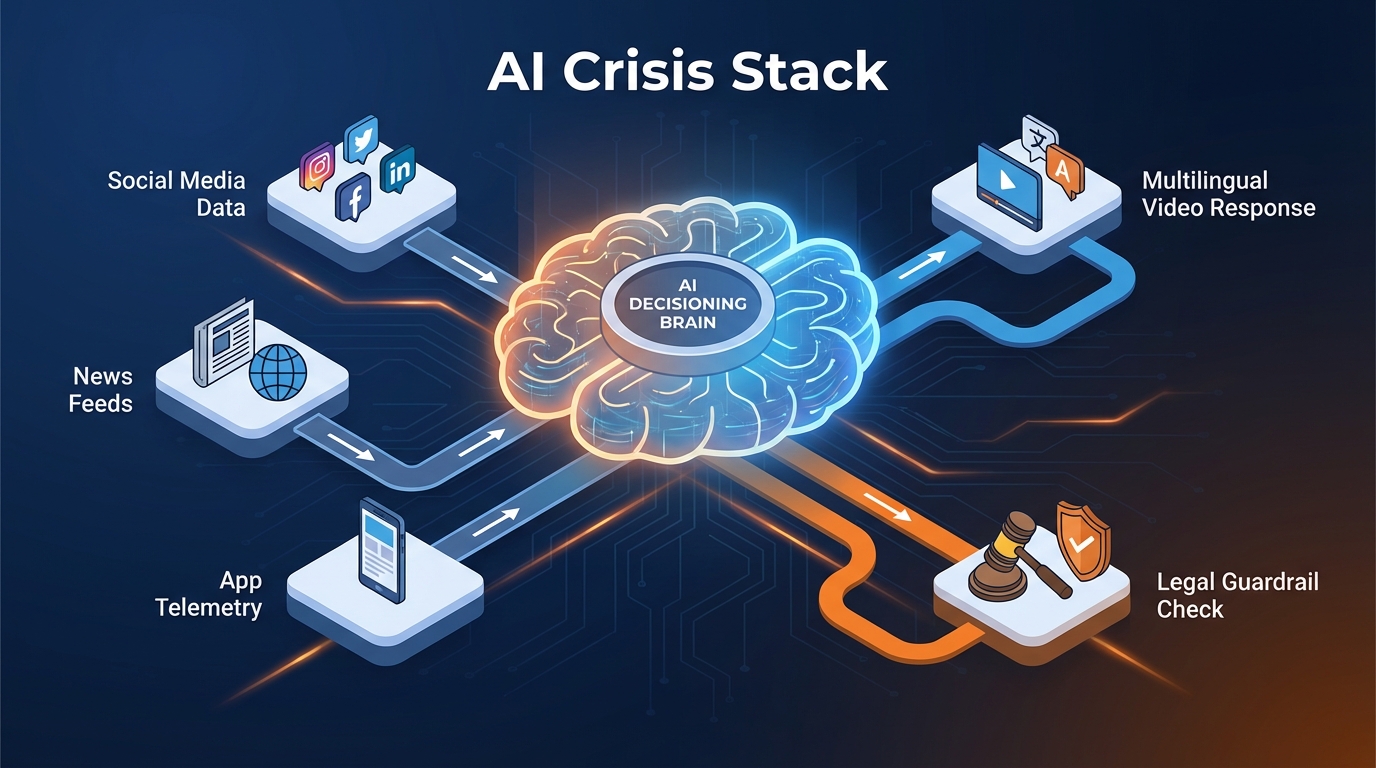
To effectively manage a crisis in 2026, enterprises must move beyond siloed tools toward an integrated architecture that prioritizes speed and precision. The ingestion layer of a modern AI crisis communication tools 2026 stack must stream data from diverse sources, including social APIs, customer support tickets, and even dark web forums where coordinated attacks are often planned. By utilizing Named Entity Recognition (NER) and rumor graph detection, these systems can distinguish between a localized complaint and a systemic reputation threat in milliseconds.
The decisioning layer acts as the “brain” of the operation, utilizing a crisis classifier to determine the severity, affected stakeholders, and geographic spread of the issue. This layer recommends specific playbooks—such as a product recall flow or a misinformation rebuttal—and routes them through pre-approved legal guardrails. For Indian enterprises, this includes multilingual crisis messaging support for Hinglish and regional scripts, ensuring that the response is culturally and linguistically resonant. This is where crisis engagement automation orchestrates the delivery of emergency stakeholder video messages across the WhatsApp Business API, SMS, and email.
Finally, the measurement loop ensures that the strategy is working in real-time. Key metrics like “time-to-first-message” and “sentiment delta” are tracked to assess containment efficiency. If the negative sentiment continues to spike, the AI can suggest adjustments to the messaging or channel mix. This closed-loop system allows for AI-powered damage control that evolves as the crisis unfolds. By integrating with the national language stack (Bhashini), these tools ensure that even the most complex technical explanations are accessible to a diverse audience, fulfilling the enterprise’s duty of care during a disruption.
| Feature Category | Enterprise Requirement | 2026 Standard |
|---|---|---|
| Detection | Regional Language Coverage | 10+ Indian Languages (Bhashini Integrated) |
| Decisioning | Latency for Anomaly Detection | < 5 Minutes from Spike to Alert |
| Activation | Video Generation Speed | < 30 Seconds per Personalized Render |
| Governance | Compliance Alignment | DPDP Act & TRAI DLT Automated Logs |
| Analytics | Sentiment Tracking | Real-time Sentiment Delta & NPS Recovery |
Sources:
3. Crisis Response Video Personalization: The New Standard for Empathy
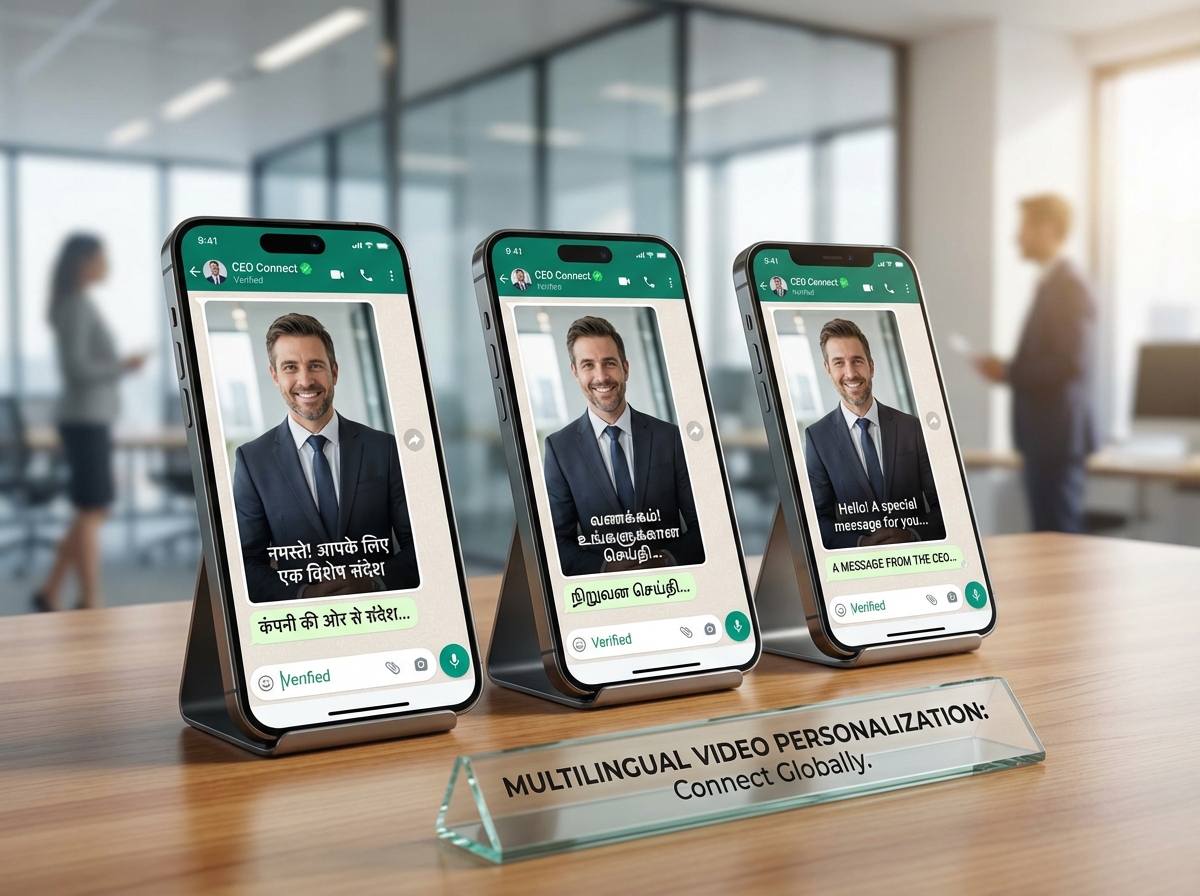
In a crisis, text-based apologies often feel cold and corporate, failing to bridge the emotional gap between a brand and its stakeholders. Crisis response video personalization has become the gold standard for 2026 because it restores the “human” element at scale. By using AI-assisted creation, a CEO or brand ambassador can deliver a personalized message to millions of customers simultaneously. These videos can be tailored by name, location, and the specific context of the issue—such as a specific product SKU or a service outage in a particular city—creating a sense of direct accountability.
Platforms like TrueFan AI enable enterprises to transform a single 15-minute leadership shoot into an infinite library of personalized crisis responses. This technology allows for “virtual reshoots,” where the AI can alter speech and lip movements in existing footage to reflect new facts or instructions without requiring the executive to return to a studio. This agility is critical when facts are evolving hourly. TrueFan AI’s 175+ language support and Personalised Celebrity Videos ensure that a brand’s message of reassurance reaches every corner of India, from Tier 1 metros to rural markets, with perfect lip-sync and voice retention.
The delivery mechanics of these emergency stakeholder video messages are optimized for the Indian mobile-first consumer. Low-latency rendering (targeting sub-30 seconds) ensures that a customer who reports a problem on a mobile app can receive a personalized video response via WhatsApp almost instantly. These videos include unique tracking links and thumbnail previews to maximize engagement. By providing multilingual crisis messaging that retains the original speaker’s voice, brands can maintain a consistent identity while demonstrating deep respect for the customer’s cultural context, a key driver in crisis communication personalization.
Sources:
4. Automated Brand Recovery Campaigns: From Containment to Trust
Containment is only the first phase of a crisis; the long-term goal is the restoration of trust. Automated brand recovery campaigns are sequenced, multi-channel journeys designed to move stakeholders from initial shock to renewed confidence. In 2026, this is managed through a 14–30–90 day cadence. The first 14 days focus on “Containment and Make-good,” where personalized apologies and safety steps are delivered alongside immediate remedies like refunds or service credits. This phase relies heavily on trust rebuilding automation to triage high-risk cohorts and ensure no customer is left unheard.
Between days 15 and 30, the focus shifts to “Remediation and Proof.” Here, brand recovery video campaigns showcase engineering updates, third-party audits, and testimonials from satisfied customers who have seen the fix in action. This is a critical period for brand reputation management AI, as the system monitors sentiment to ensure the “proof of fix” is resonating. Solutions like TrueFan AI demonstrate ROI through these recovery phases by providing the data-driven insights needed to A/B test scripts and optimize the delivery of reassurance messages based on stakeholder sentiment.
The final phase, spanning days 31 to 90, is dedicated to “Recovery and Trust.” This involves broader brand storytelling that highlights community investments and systemic process changes. By utilizing proactive crisis prevention videos, brands can educate their audience on how to avoid similar issues in the future, effectively turning a past crisis into a demonstration of leadership. Success in this phase is measured by the “sentiment delta”—the positive shift in brand perception compared to the pre-crisis baseline—and the return of customer traffic and conversion rates to normal levels.
2026 Recovery ROI Metrics:
- Time-to-First-Message: Reduced from hours to minutes via crisis engagement automation.
- Containment Time: Target a 50% reduction in the duration of negative sentiment spikes.
- Make-good Redemption: Tracking the utilization of personalized offers to gauge customer forgiveness.
- Sentiment Delta: Measuring the weighted shift from negative to neutral/positive over 90 days.
- Conversion Recovery: The speed at which sales/traffic return to pre-crisis benchmarks.
5. Rapid Response Marketing automation in India: Compliance and Scale
Executing rapid response marketing automation India requires a deep understanding of the local regulatory and technical landscape. The WhatsApp Business API is the primary channel for crisis engagement in India, offering high read rates and the ability to host two-way flows for Q&A. However, enterprises must navigate strict opt-in requirements and template approvals to avoid being flagged as spam. In a crisis, the “green tick” of a verified brand account is essential for establishing trust, and AI tools must manage rate limits to ensure that millions of messages are delivered without delay.
SMS remains a critical fallback and reach-extension channel, governed by the Telecom Regulatory Authority of India (TRAI) under the Distributed Ledger Technology (DLT) framework. In 2026, compliance involves registering specific “Principal Entity” (PE) headers and content templates for crisis scenarios. AI-powered damage control systems must automatically suffix or prefix headers as per the latest 2025–2026 TRAI mandates and maintain explicit consent records to prevent regulatory fines. Furthermore, any multilingual crisis messaging sent via SMS must be audited for accuracy to ensure that regional translations do not inadvertently violate DLT template approvals.
Data privacy under the DPDP Act is the bedrock of all business continuity communication. Enterprises must ensure that customer data used for personalization is handled with strict role-based access controls and encryption. In the event of a data breach—a common trigger for a crisis—the AI crisis communication tools 2026 must be ready to trigger automated breach notifications that comply with the 72-hour reporting window. By integrating synthetic media labeling and maintaining a public “edits log” for AI-assisted videos, brands can meet the transparency expectations of both the Indian government and the digital-savvy consumer.
Sources:
- TRAI DLT 2025/2026 Updates (PDF)
- MeitY: DPDP Compliance (Official PDF)
- IndiaAI: AI content labelling advisory
6. Strategic Playbooks and Implementation Roadmap
A successful response is built on preparation, not just technology. The “First 60 Minutes” of a crisis are the most critical. During this window, real-time sentiment monitoring triggers an alert, the crisis is classified, and a leadership holding statement—including a 45-second personalized video—is generated. This playbook ensures that the brand is the first to define the narrative. Within the “First 24 Hours,” the response expands to include emergency stakeholder video messages for employees, partners, and regulators, while a dedicated microsite with live FAQs is launched to centralize information.
Implementation Roadmap (30–60–90 Days):
- Days 0–30 (Pilot): Identify the top three high-risk scenarios (e.g., data breach, product failure, misinformation). Integrate listening feeds and stand up video templates in English and three major regional languages (Hindi, Tamil, Bengali). Connect to WhatsApp and SMS gateways.
- Days 31–60 (Scale): Expand multilingual crisis messaging to 10+ languages. Automate playbook triggers and finalize legal/compliance guardrails. Conduct a full-scale tabletop drill involving the CMO, Legal, and IT teams to test the crisis engagement automation flow.
- Days 61–90 (Embed): Formalize the “AI War Room” SOPs. Integrate the crisis stack with the enterprise CRM/CDP for deeper personalization. Deploy the automated brand recovery campaigns kit and establish a quarterly drill schedule to ensure the system remains “warm” and ready for deployment.
By following this roadmap, Indian enterprises can transition from a reactive posture to a proactive one. Case studies from 2025–2026 show that brands using AI-powered damage control recovered their NPS scores 3x faster than those relying on traditional PR. Whether it is a consumer electronics firm managing a product recall or a financial services provider addressing a service outage, the ability to deliver a personalized, localized, and empathetic response is the ultimate competitive advantage in the age of AI.
7. Governance, Ethics, and FAQ
As enterprises adopt AI crisis communication tools 2026, ethical considerations must remain at the forefront. The use of synthetic media, even for positive crisis resolution, carries risks of misuse and “uncanny valley” effects. Brands must prioritize “Human-in-the-Loop” (HITL) approvals for high-stakes communications and ensure that all AI-generated content is clearly watermarked. This transparency not only satisfies regulatory requirements but also builds long-term trust with a consumer base that is increasingly wary of digital manipulation.
Brands should also define escalation paths, dual-approval gates, and publish transparency notes that disclose when content was AI-assisted. Combining provenance checks with immutable audit trails helps align with governance frameworks while preserving a defensible record for regulators and the public.
Sources:
Recommended Internal Links
- AI Crisis Communication Tools for Rapid Response Success
- AI Crisis Communication Tools for Rapid Brand Recovery
- WhatsApp Business Commerce Automation 2026: Growth Playbook
- B2B Sales Video Personalization 2026: Accelerate Deals
- Quick Commerce Video Personalization India: Drive ROI Now
Frequently Asked Questions
How do we prevent our AI crisis tools from being used to create misinformation?
Use provenance checks, blockchain-based hashing of source footage, and strict role-based access controls. Log every render with an immutable audit trail and enforce automated moderation filters that block content violating legal or ethical policies.
Is it ethical to use personalized AI videos during a sensitive crisis?
Yes—when done transparently and with consent. Apply purpose limitation under the DPDP Act, disclose AI assistance, and use personalization to improve clarity and empathy rather than to manipulate.
How does the system handle the diversity of Indian languages?
Integrate with Bhashini and advanced voice cloning to retain the original speaker’s tone and emotion across 175+ languages, ensuring authentic, respectful multilingual crisis messaging.
What happens if the AI makes a mistake in a crisis message?
Establish manual overrides and a kill switch. Gate high-severity sends behind dual approvals (e.g., CMO and Legal) and maintain rollback templates to rapidly correct or retract messages.
Can these tools integrate with our existing CRM like Salesforce or SAP?
Yes. Modern stacks are API-first, enabling real-time data pulls for crisis communication personalization and push-back of engagement metrics into your CRM/CDP for a unified recovery view.