AI Impact Summit: Enterprise AI Video Personalization with Multi‑Agent Orchestration and Proven ROI (by TrueFan AI)
Estimated reading time: ~7 minutes
Key Takeaways
- Indian enterprises are moving from pilots to industrial-scale agentic AI for personalized video engagement.
- Multi‑agent orchestration enables end-to-end planning, compliance, synthesis, and optimization.
- A scalable personalized video SaaS must be API-first, multilingual, and MarTech-integrated.
- Track ROI using incremental revenue, net ROI %, and payback period, not vanity metrics.
- ISO 27001-grade governance and PII-safe workflows are non-negotiable for the enterprise.
At the AI Impact Summit, CTOs and growth leaders can evaluate how TrueFan’s enterprise AI video platform in India operationalizes multi‑agent AI workflows to deliver scalable personalized video SaaS with measurable, rapid ROI. As the digital landscape shifts toward autonomous systems, the convergence of generative media and agentic orchestration represents the next frontier for Indian enterprises seeking to dominate customer engagement.
The 2026 AI Impact Summit has underscored a pivotal transition: the move from experimental generative AI to industrial-scale, agentic AI marketing. For the C-suite, the challenge is no longer about generating a single piece of content, but about building a “generative engine” that integrates seamlessly with existing data stacks while maintaining rigorous ISO 27001 compliance. Platforms like TrueFan AI enable this transition by providing the infrastructure necessary to transform static marketing into dynamic, one-to-one video experiences at a scale of millions.
1. The Strategic Imperative: Enterprise AI Adoption in India Post-Summit
The AI Impact Summit 2026 has served as a clarion call for Indian enterprises to move beyond “AI tourism” and toward deep structural integration. With the Indian government’s focus on “AI for All” and the expansion of sovereign AI compute through the IndiaAI Mission, the domestic market is projected to reach $17.4 billion by the end of 2026. This growth is driven by a demand for trusted, inclusive, and scalable solutions that can navigate the linguistic and cultural complexity of the Indian subcontinent.
For CTOs attending the summit, the priority has shifted toward governance and measurable outcomes. The World Bank and UN ODET side events emphasized that while compute access is expanding, the “last mile” of AI adoption remains the most difficult. This is where an enterprise AI video platform in India must prove its worth—not just through visual fidelity, but through its ability to handle PII (Personally Identifiable Information) securely and deliver sub-minute latency across diverse network conditions.
2. Deconstructing Agentic AI Marketing and Multi-Agent AI Workflows
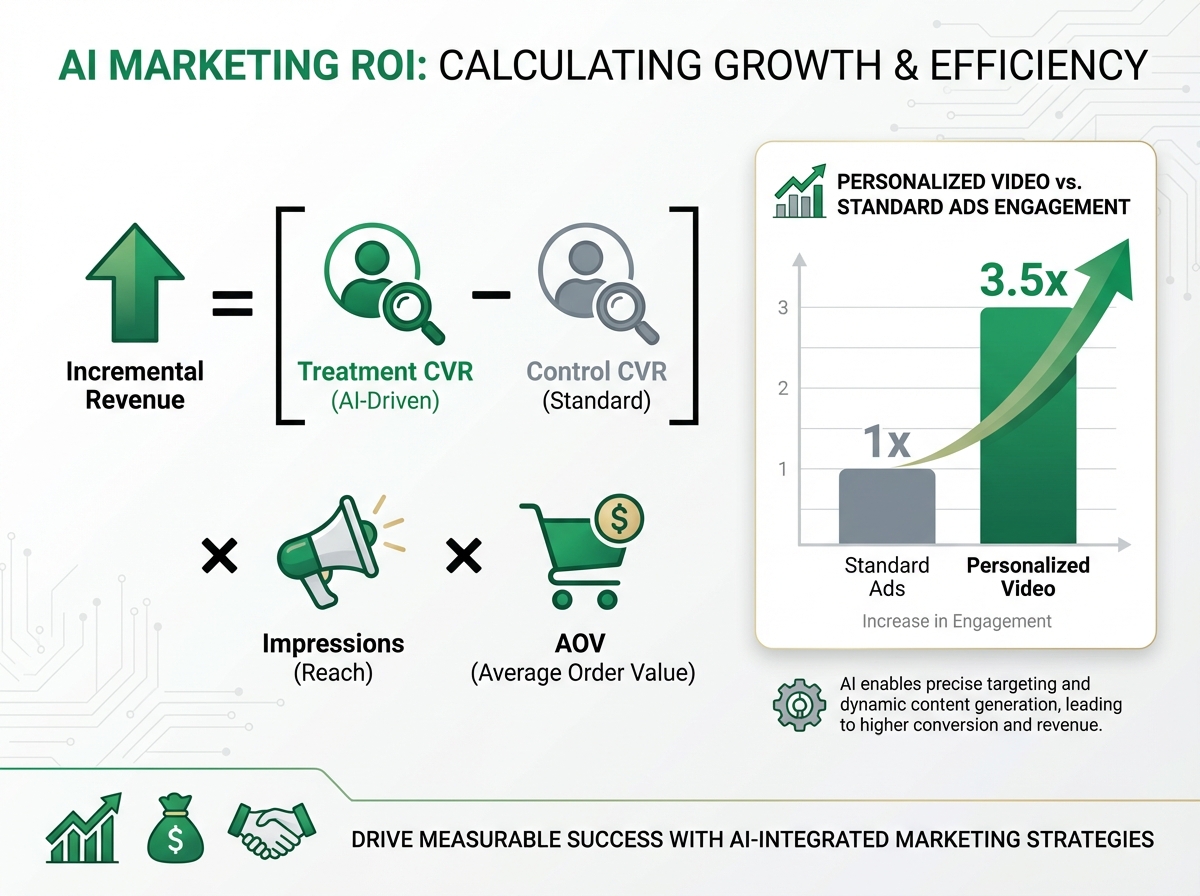
To understand the future of engagement, one must distinguish between “AI agents” and agentic AI marketing. While a single agent might handle a chatbot query, agentic AI refers to a sophisticated orchestration of multiple, specialized agents working in concert to achieve a complex business objective. This multi-agent AI workflows approach moves away from linear, rigid automation toward a dynamic, goal-oriented system that can plan, execute, and self-correct.
In the context of video personalization, this means moving beyond simple mail-merge style video editing. A multi-agent system handles the entire lifecycle of a campaign. It begins with a Planning Agent that analyzes the campaign brief and sets specific KPI targets, such as a 15% uplift in Click-Through Rate (CTR). This agent then delegates tasks to subordinate agents, ensuring that every step of the process is aligned with the overarching business goal.
The Multi-Agent Architecture for Video Personalization
- Data Agent: This agent securely interfaces with your CRM or CDP (e.g., Salesforce, Adobe Experience Platform). It extracts necessary features like user name, city, and last purchase while strictly enforcing data minimization and hashing PII. It ensures that the data used for personalization is compliant with local regulations like India’s DPDPA.
- Scriptwriter Agent: Using Retrieval-Augmented Generation (RAG), this agent crafts personalized scripts based on approved brand guidelines. It handles 175+ languages, ensuring that a user in Kochi receives a message in Malayalam that is as culturally resonant as the Hindi version sent to a user in Lucknow.
- Compliance Agent: Acting as an automated “red team,” this agent scans every script and generated frame for toxicity, IP violations, or brand-safety risks. It serves as a critical gatekeeper, blocking any content that deviates from the enterprise’s ethical standards.
- Synthesis Agent: This is the engine of the operation, utilizing diffusion-based models for face reanimation and consented voice cloning. It ensures perfect lip-sync and can perform “virtual reshoots”—updating a specific offer or line in a video without requiring the original celebrity or actor to return to a studio.
- QA and Analytics Agents: The QA agent validates the final output for factual accuracy and pronunciation, while the Analytics agent tracks real-time performance, feeding data back into the system to optimize the next batch of videos.
3. Scalable Personalized Video SaaS: Enterprise Capabilities and Outcomes
For a CTO, the “how” is important, but the “what” is what drives adoption. A scalable personalized video SaaS must offer more than just high-quality video; it must offer an API-first architecture that integrates into the existing MarTech stack. TrueFan AI's 175+ language support and Personalised Celebrity Videos provide a unique competitive advantage, allowing brands to leverage the massive cultural capital of celebrities while maintaining the precision of 1:1 data-driven marketing.
4. The AI Marketing ROI Calculator: Quantifying the Generative Transformation
The most common question at the AI Impact Summit is: “What is the actual return?” To answer this, enterprises must move beyond vanity metrics like “views” and focus on incremental revenue and CAC (Customer Acquisition Cost) payback. Solutions like TrueFan AI demonstrate ROI through a rigorous framework that compares AI-driven personalized video against traditional static or generic video benchmarks.
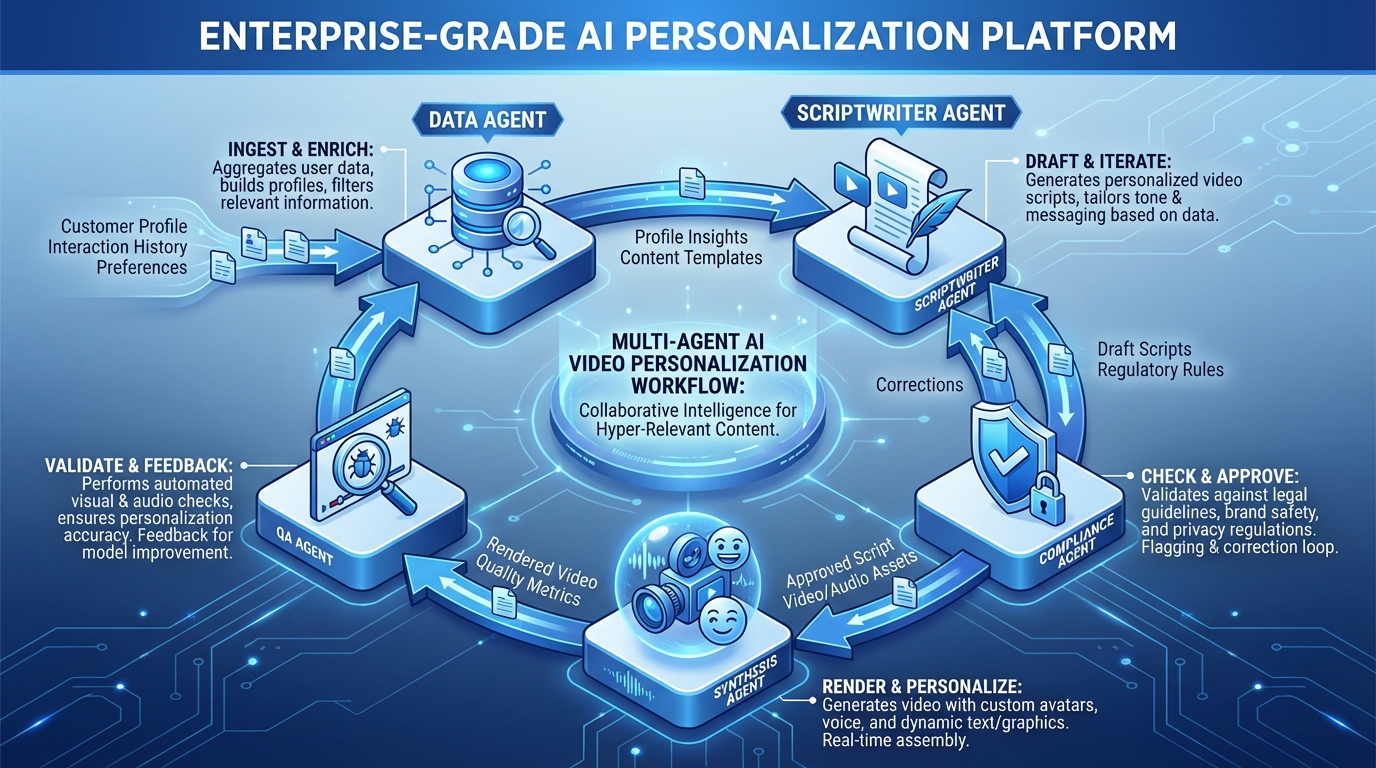
The ROI Formula for Enterprise Video:
- Incremental Revenue = (Treatment CVR − Control CVR) × Impressions × AOV
- Net ROI % = [(Incremental Revenue − Incremental Costs) / Incremental Costs] × 100
- Payback Period = Incremental Costs / Monthly Incremental Gross Profit
Consider a sample scenario for a major Indian e-commerce player. With an audience of 5,000,000 users, a personalized video campaign might increase the CTR from a baseline of 2.0% to 3.1%. If the AOV is ₹1,800 and the cost per video is optimized to ₹15 at scale, the resulting incremental revenue can reach tens of millions of rupees within a single festive season.
5. Governance and Security: The ISO 27001 Certified AI Platform
In the era of generative AI, trust is the ultimate currency. For a CTO, a vendor's security posture is as important as their feature set. An ISO 27001 certified AI platform provides the necessary assurance that the vendor has a robust Information Security Management System (ISMS) in place.
6. Proof of Scale: Why TrueFan is Among the Best AI Tech Companies in India
TrueFan’s recognition as the AWS Gen AI/ML Disruptor of the Year 2025 is a testament to its ability to handle enterprise-scale workloads. Being one of the best AI tech companies in India requires more than just innovative tech; it requires a track record of delivering results for the country’s largest brands.
Case Study Highlights:
- Zomato (Mother’s Day): To celebrate Mother’s Day, Zomato utilized TrueFan’s platform to generate 354,000 personalized videos in a single day. The campaign went viral on social media, driving record-breaking order volumes.
- Hero MotoCorp: During the festive season, Hero MotoCorp sent 2.4 million personalized greetings to potential buyers. This led to a significant uplift in dealership footfall.
- Goibibo: By integrating personalized celebrity video nudges into their WhatsApp communication, Goibibo saw a +17% increase in read rates.
- Cipla: For Doctor’s Day, Cipla generated 6,400 high-quality videos to thank healthcare professionals.
7. The CTO’s 90-Day Execution Playbook and FAQ
Moving from the AI Impact Summit to a full-scale production rollout requires a structured approach. A 90-day playbook ensures that the technology is validated, the security is hardened, and the ROI is proven before a company-wide launch.
Conclusion: The Path to Generative AI Marketing Transformation
The AI Impact Summit has made it clear: the future of enterprise growth in India is agentic. By combining the power of multi‑agent AI workflows with the emotional resonance of personalized video, brands can achieve a level of scale and intimacy that was once a contradiction in terms.
Frequently Asked Questions
What is agentic AI marketing and how is it different from single-agent automation?
Agentic AI marketing coordinates multiple specialized agents—planning, data, compliance, synthesis, QA, and analytics—to plan, execute, and optimize complex campaigns end to end. Unlike a single-agent bot, a multi-agent system can set goals, self-correct, and continuously learn from performance feedback.
How do enterprises measure ROI for personalized video campaigns?
Move beyond views and measure incremental impact: calculate incremental revenue from lift in CVR or CTR, compute net ROI % using incremental costs, and track payback period to understand how quickly the investment returns profit.
What security and compliance standards are required for enterprise AI video?
Enterprises should demand ISO 27001-certified ISMS, PII minimization and hashing, robust access controls, audit trails, and automated red-teaming for content safety. Regional compliance (e.g., India’s DPDPA) must be enforced throughout data flows.
How does multi‑agent orchestration scale to millions of personalized videos?
Through API-first pipelines, parallelized synthesis, multilingual script generation, and closed-loop analytics that continually optimize outputs. Compliance and QA agents gate content quality, while orchestration layers allocate workloads efficiently.
What is a 90‑day execution playbook for enterprise rollout?
A time-boxed plan to validate use cases, integrate data sources, harden security, pilot campaigns, and prove ROI. It aligns stakeholders, defines KPIs, and de-risks scale-up before broader deployment.



