Board Exam Stress Marketing 2026: AI Support + Personalized Career Counseling That Convert Anxiety to Enrollment
Estimated reading time: ~12 minutes
Key Takeaways
- Adopt a support-first strategy that prioritizes crisis resources, counseling, and well-being over sales CTAs during result season.
- Combine AI-powered emotional support with personalized career counseling to convert anxiety into confident enrollment decisions.
- Deploy a result-day crisis management playbook with automated triage, counselor routing, and localized, empathetic videos.
- Use post-result career path mapping and skill-gap analysis to provide clear, ROI-backed next steps for students and parents.
- Ensure security and compliance (ISO 27001, SOC 2), parental consent, and data minimization across all workflows.
The April–May window in India represents the most volatile period in the academic calendar, making board exam stress marketing 2026 a critical priority for EdTech leaders. During this high-stakes season, millions of students and parents navigate a landscape of intense pressure, where the transition from “anxiety” to “action” determines long-term enrollment and retention.
For EdTech enterprises, the challenge is no longer just about selling a course; it is about providing a trauma-informed support system. By integrating AI-powered emotional support with personalized career counseling, platforms can build deep trust while staying empathy-first and compliant with evolving mental health standards.
Why April–May is the pressure cooker for academic stress relief marketing
In 2026, the Indian EdTech sector has shifted toward a “support-first” model, recognizing that student well-being is the primary driver of brand loyalty. Academic stress relief marketing is now defined as evidence-based messaging and interventions designed to reduce distress during peak stress windows like result days and re-evaluation periods.
The institutional recognition of this crisis is evident in the CBSE’s official post-result psychosocial counseling initiatives. For the 2025-2026 cycle, authorities have expanded 24/7 IVRS and toll-free tele-counseling services to manage the surge in student inquiries following result announcements.
Marketing in this environment requires an ethical frame where enrollment is a secondary outcome of genuine support. EdTechs must mirror these institutional efforts by providing transparent escalation paths to professional counselors and crisis resources, ensuring that no student is left without a safety net during a result-day spike.
Recent NCRB data continues to highlight that academic pressure remains a leading cause of distress among Indian youth, necessitating a shift toward mental wellness student retention strategies. By prioritizing safety and referrals before product offers, enterprises can demonstrate true authoritativeness and expertise in the student success journey.
Sources:
- CBSE: Post-Result Counseling Press Release (IVRS and tele-counseling)
- NDTV Education: CBSE launches helpline and free counselling after results
- MHFA India: Indian schools and colleges prioritize student mental health
Pre-result preparation that builds resilience and trust through exam confidence building content
Building resilience begins weeks before the first result is even uploaded to a portal. Effective exam confidence building content includes structured micro-lessons, coping skills, and normalization narratives that are proven to reduce pre-test anxiety and improve cognitive performance.
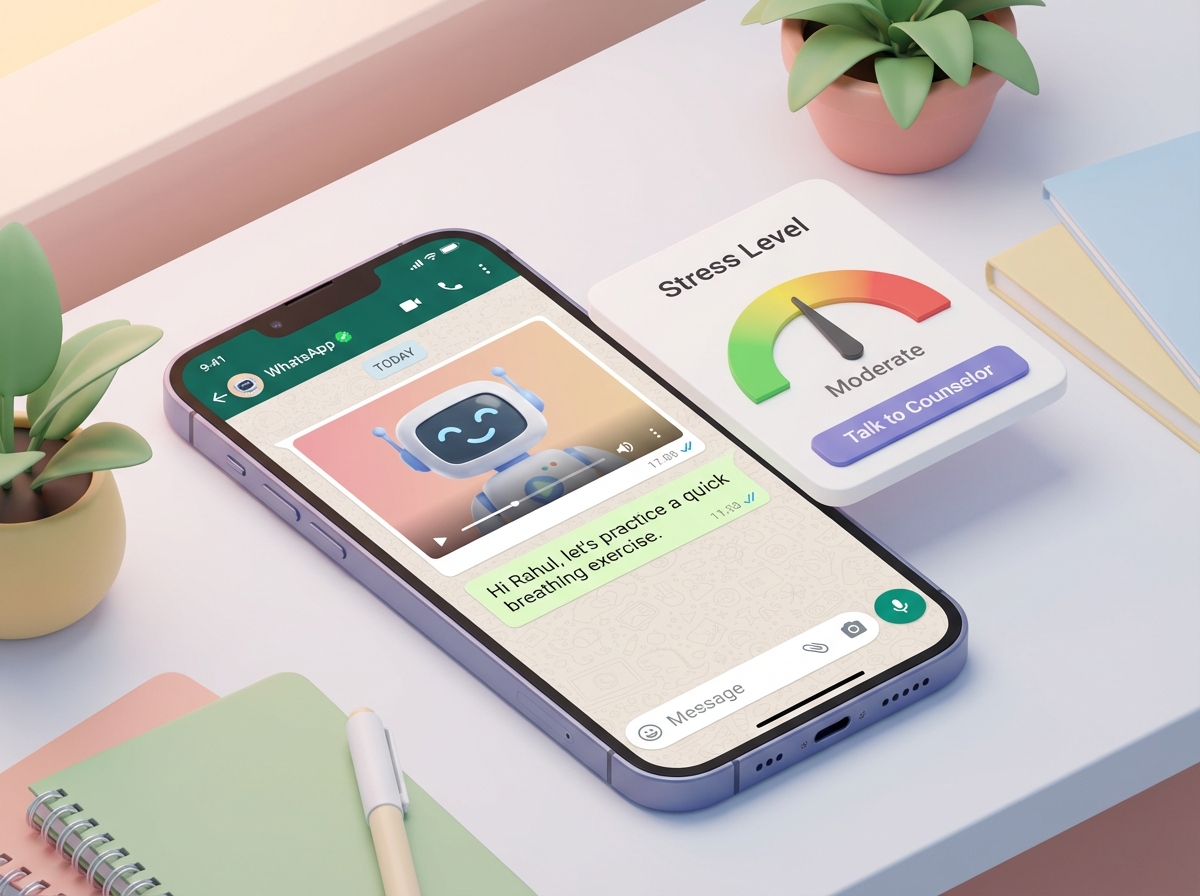
These resources should focus on practical interventions such as breathing techniques, sleep hygiene, and “what to do the night before” scripts. By delivering these through in-app home widgets and WhatsApp, EdTechs can provide timely support when students are most likely to feel overwhelmed.
Platforms like TrueFan AI enable enterprises to scale this support by creating hyper-personalized student anxiety support videos. These short clips deliver localized coping guidance, addressing the student by name and referencing their specific exam board, whether it be CBSE, ICSE, or a State Board.
Personalization fields such as the student's region and preferred language ensure the message resonates on a personal level. Timing these sends for the 7–9 pm window, when parents and students are typically together, maximizes the impact of the wellness message.
Furthermore, parent communication wellness content is essential for guiding families through supportive responses. Teaching parents how to listen, validate, and guide their children—rather than focusing solely on marks—creates a healthier home environment that supports the EdTech's retention goals.
Finally, entrance exam preparation offers should be introduced as value-first incentives, such as free doubt-clearing clinics or last-mile mock analytics. This approach reduces stress by providing a clear path forward, responsibly introducing product value without exploiting the student's current state of anxiety.
Sources:
- EducationPost.in: CBSE begins free counselling after Class 10 & 12 results
- India Today BestColleges: CBSE initiates free psychosocial counselling
Result-day readiness: your exam result crisis management blueprint
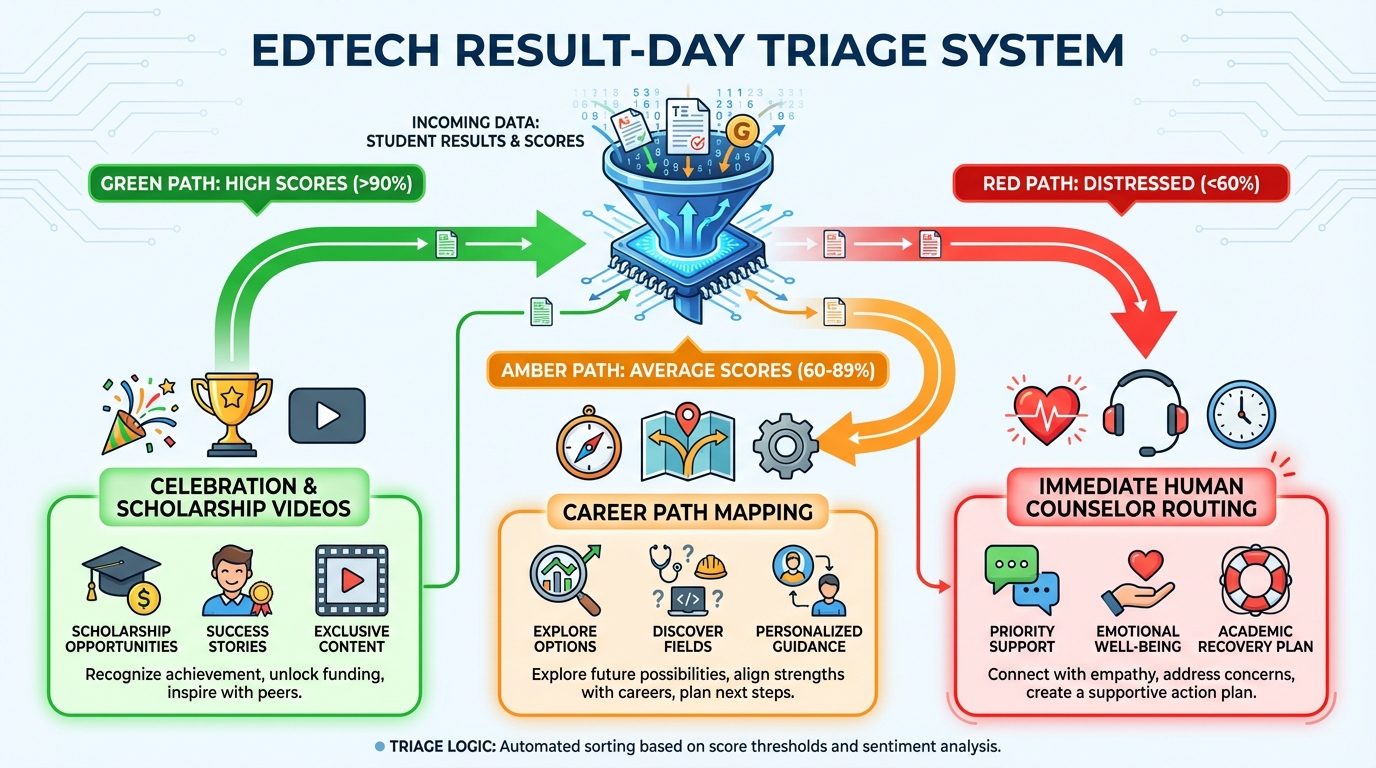
The moment results are released, EdTechs must activate a cross-functional exam result crisis management playbook. This blueprint covers everything from automated triage to counselor routing, ensuring that every student receives the specific level of support they need based on their performance.
Triage flows should categorize students into “green,” “amber,” and “red” bands. While “green” students receive celebratory content, “red” students—those who are distressed or have failed—must be immediately routed to live counselors or crisis helplines.
TrueFan AI's 175+ language support and Personalised Celebrity Videos can be integrated into this triage system to deliver empathetic messages from relatable figures. These videos can provide immediate comfort and outline the next steps, such as re-evaluation procedures or alternative pathway planning.
In 2026, career counseling automation EdTech has become the standard for managing result-day spikes. By using API-driven routing, platforms can surface the right counselor or AI triage based on real-time score ranges and distress signals detected in user interactions.
For students who face setbacks, failure recovery support campaigns offer a stepwise pathway for repeats and re-evaluations. These campaigns should include free well-being sessions and pathway videos for alternative routes like open schooling or skills-first bridge programs.
Additionally, scholarship opportunity videos can be automatically generated to show students how their scores map to relevant grants and fee waivers. Delivering these personalized explainers within 48–72 hours of the results helps students see a viable financial future, reducing the immediate panic of result day.
Sources:
Post-result personalization: from uncertainty to action with personalized career path mapping
Once the initial shock of result day passes, the focus shifts to personalized career path mapping. This involves the algorithmic generation of viable education routes based on a student's scores, interests, and long-term goals, presented with total clarity on costs and outcomes.
A critical component of this phase is skill gap analysis personalization. By mapping a student's current competencies to the requirements of their target programs, EdTechs can provide a tailored micro-bridge plan that prepares them for the next stage of their education.
To drive engagement with these plans, course recommendation AI videos can be deployed to show students their “best-fit path.” These videos should be localized for both parents and students, explaining the expected workload and the potential return on investment for each recommended course.
Solutions like TrueFan AI demonstrate ROI through higher watch-through rates and increased counselor bookings by making these recommendations feel personal rather than generic. When a student sees a path designed specifically for them, their confidence in the platform's ability to guide their future grows significantly.
Furthermore, upskilling pathway marketing can be used to promote short skills modules that align with the student's chosen path. For example, a student aspiring for a Computer Science degree might be offered a Python micro-credential to secure their commitment and improve early-term retention.
By bundling these programs with monthly counselor check-ins, EdTechs can ensure a smooth transition from the board exam season into the next academic year. This holistic approach transforms a moment of high anxiety into a structured journey toward professional success.
Sources:
Implementation timeline and technical blueprint for mental wellness student retention
Executing a successful mental wellness student retention strategy for the 2026 board exam season requires a structured timeline that begins months in advance. The preparation phase, occurring between February and March, should focus on building content libraries and configuring data integrations.
During this time, data teams must establish a robust schema that includes fields for exam boards, predicted scores, and language preferences. This allows for the seamless triggering of personalized content when results are finally uploaded to the CRM or LMS.
In early April, the launch of exam confidence building content and parent wellness drips sets the stage for a supportive relationship. These early touchpoints establish the EdTech as a partner in the student's success, rather than just a service provider.
As the result window opens in May, the activation of exam result crisis management protocols becomes the top priority. Real-time APIs must handle the surge in data, ensuring that triage videos and counselor slots are surfaced within seconds of a result being confirmed.
The post-result phase, extending through June and July, is dedicated to scaling personalized career path mapping and upskilling offers. By analyzing the engagement data from these campaigns, teams can optimize their scripts and delivery timing for the following year.
Security and compliance must remain at the core of this technical blueprint. Adhering to ISO 27001 and SOC 2 standards ensures that student data is handled with the highest level of integrity, which is paramount when dealing with sensitive academic and emotional information.
Sources:
Conclusion: Converting Anxiety into Action
The 2026 board exam season presents a unique opportunity for EdTech enterprises to redefine their relationship with students. By moving beyond transactional marketing and embracing a holistic support model, brands can drive both social impact and business growth.
Integrating board exam stress marketing 2026 strategies—such as student anxiety support videos, personalized career path mapping, and course recommendation AI videos—allows platforms to meet students exactly where they are. This empathy-led approach is the key to long-term mental wellness student retention.
As the industry continues to evolve, the winners will be those who prioritize the human element of education. By leveraging advanced AI tools responsibly, EdTech leaders can ensure that every student has the support they need to navigate the pressure of board exams and emerge with a clear, confident path toward their future.
2. Implementing Exam Result Crisis Management and Empathetic Communication (Channel Note)
In the Indian context, WhatsApp remains the dominant channel, with open rates frequently reaching 98%. By orchestrating a T0 (Results Day) empathetic video followed by a T+24h parent communication automation sequence, brands can ensure that the support ecosystem around the student is also informed and calm. This multi-stakeholder approach is essential for mental wellness student retention and long-term brand loyalty.
6. Enterprise Execution: Parent Communication Automation and Technical Integration (Channel Note)
For an enterprise-level rollout, parent communication automation is the most critical yet often overlooked component. In India, parents are the primary decision-makers and financiers of education. Automated sequences must be designed to keep parents informed via WhatsApp and SMS, providing them with calm, data-backed explainers on funding, timelines, and placement outcomes. This reduces household tension and aligns the parent with the student's chosen path.
Frequently Asked Questions
How can EdTechs ensure their marketing remains ethical during the high-stress result season?
Ethical marketing requires a “support-first” approach where crisis resources and emotional validation take precedence over sales CTAs. By integrating official helplines and providing free wellness resources, brands can build trust that leads to organic enrollment.
What role does AI video play in reducing student anxiety?
AI video allows for hyper-personalization at scale, delivering empathetic messages that address students by name and in their native language. This creates a sense of being “seen” and supported, which is far more effective than generic text-based communication.
How does TrueFan AI help in managing the scale of result-day communications?
TrueFan AI can generate hundreds of thousands of personalized videos in a single day, allowing EdTechs to provide immediate, tailored responses to every student as soon as their results are released. This scale ensures that no student is left waiting for support during a critical moment.
Can personalized career path mapping actually improve student retention?
Yes, by providing a clear, data-driven roadmap for the future, EdTechs reduce the uncertainty that often leads to churn. When students see a viable path forward that aligns with their scores and interests, they are more likely to remain committed to the platform.
What are the key data privacy considerations for 2026 academic marketing?
Enterprises must prioritize parental consent for minors, data minimization, and strict adherence to international security standards like SOC 2. Transparent data handling is essential for maintaining the trust of both parents and educational institutions.



